The green film and black spots on Algarve terraces after winter are algae, lichen and mould, and they come back every year where water sits and the sun does not reach. Clean them in May, once the rain has stopped and before the summer guests arrive: a stiff brush and a cleaner made for the surface, rinsed with plenty of water, works on almost everything. Be careful with the pressure washer on terracotta, limestone and grout, because it removes the surface along with the dirt.
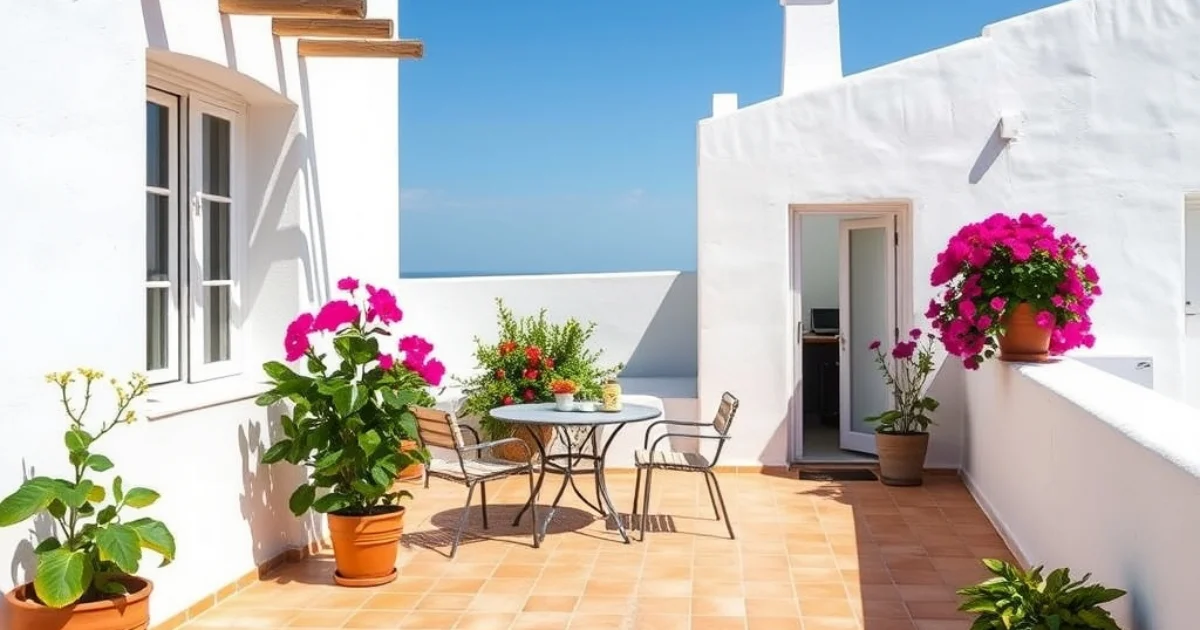
Every spring the same corners go green: the strip of terrace along the north wall, the steps that never get the sun, the grout lines around the outdoor shower, the bottom of the pool wall. By May, with the rain gone and the first long lunches outside, those patches are what everyone sees in the photos. In a holiday let in Tavira or Cabanas, they are also what guests mention in the reviews.
What the green and black actually is
Not all outdoor marks are the same, and the right cleaner depends on which one you have.
- Green film or slime is algae. It grows on any surface that stays damp for days at a time, and it makes tiles and steps slippery.
- Black spots in grout and on render are usually mould, the same family as the black spots on a bathroom ceiling.
- Grey, orange or pale green crusty patches that look like they are part of the stone are lichen. They hold on hard and take longer to remove.
- White bloom on terracotta or new render is not organic at all. It is salt coming out of the material as it dries, and it needs a different approach.
All of the organic ones have the same cause: water that does not drain or dry. That matters, because cleaning without fixing the cause means doing it all again next spring.
How to clean each surface
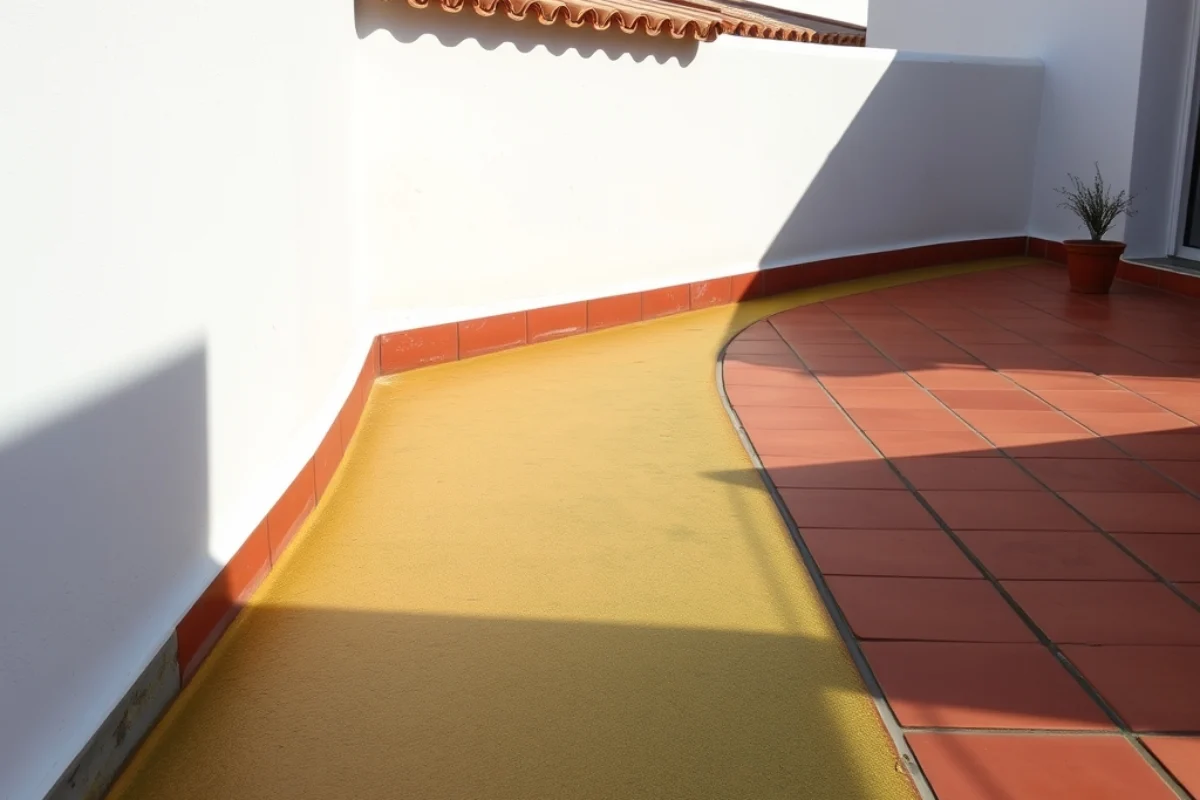
Outdoor floors in the eastern Algarve are a mix of traditional and modern materials, and each one reacts differently to cleaners and water pressure.
Whatever the surface, work in the morning, when the floor is cool and the cleaner does not dry before it has had time to work. Rinse more than you think you need to. Cleaner left in the pores of terracotta keeps reacting in the sun.
The pressure washer question
A pressure washer is satisfying, and on glazed tiles and concrete it does a fast job. On softer materials it does damage that only shows later. Terracotta and old limestone lose their surface and become rougher, which means algae grips them better next year. Grout gets blown out of the joints. Paint on rendered walls lifts in patches, and water gets driven into small cracks.
If you use one, keep it at low pressure with a wide fan nozzle, hold it at least 30 centimetres from the surface, and never point it at grout lines or render up close. On terracotta, a brush and a bucket are slower but leave a floor that stays clean for longer.
Outdoor furniture, cushions and the rest
Furniture that spent the winter outside, or in a damp storeroom, comes out with its own problems. Plastic and resin chairs go chalky and grey and need a non-abrasive cleaner. Teak and other hardwoods go silver and can be washed with a soft brush and soapy water before oiling. Aluminium frames just need washing and drying.
Cushions are the weak point. Covers stored damp grow mildew in black dots that do not wash out easily. Check them before the first sunny weekend, wash the covers that can be washed, and replace the foam inside if it smells musty even when dry. Parasols and awning fabric often have the same black spots along the folds.
Find out why it went green
Algae and mould grow where water stays. Before cleaning, spend five minutes looking for the reason, because most of them are cheap to fix:
- A gutter or downpipe that overflows onto the same spot every time it rains.
- Irrigation spraying onto the terrace or a wall instead of the plants.
- A terrace with no slope, or a drain blocked with leaves, so water sits in a shallow puddle for days.
- Pots standing directly on the tiles, which keep the floor wet underneath.
- A dripping outside tap or an outdoor shower that never quite dries.
When to do it, and what it costs
May is the right month in most years. The spring rain has usually stopped, so a cleaned terrace stays clean, and there is still time before the summer bookings and the strong sun. If you clean in March, a few wet weeks can bring the green back before June.
For holiday lets and villas, the outside is part of a full deep clean in Tavira: our cleaners publish 2026 prices from 220 euros for a three or four bedroom house, with terrace, outdoor furniture and railings included in the villa package. For an outdoor-only session, the hourly option at 22 euros per hour per cleaner, with a four hour minimum of team time, is usually the better fit. Heavily stained stone or a surface that needs restoring and sealing is quoted after we see it.
If your terrace is covered in fine red or yellow dust rather than green, that is a different problem, and the method is in what Saharan dust does to your home and how to clean it. For the inside of a holiday let at the start of the season, see the pre-season clean before Easter.
When it is not a cleaning job
Some outdoor marks will not wash off because they are not on the surface. Damp patches at the base of a wall that come back every winter are rising damp or salt, and they need a builder or painter who works with old walls. A terrace that holds water because it has sunk or lost its slope needs a builder. A stain spreading on the ceiling of the room below a terrace is a waterproofing problem, not a dirty floor. A good clean will often make these easier to see, which is useful in itself.
Questions owners ask
What is the green stuff on my terrace tiles?
Algae. It grows wherever the floor stays damp for days, usually in shade or where water drains badly, and it makes the tiles slippery.
Can I use bleach to clean algae off a terrace?
On glazed tiles, diluted and well rinsed, yes. On terracotta and natural stone it can stain, and the runoff harms plants and can upset the water in a pool, so a specific algae cleaner is safer.
Is a pressure washer safe on terracotta?
Only at low pressure with a wide nozzle held well back. High pressure pits the surface and blows out the grout, and a rougher floor goes green faster next time.
How do I stop the terrace going green again?
Fix where the water comes from: overflowing gutters, irrigation spraying the floor, blocked drains or pots standing on the tiles. Sealing terracotta after cleaning also helps.
When is the best time to clean outdoor areas in the Algarve?
In May, after the spring rain and before the summer heat and bookings. A terrace cleaned too early can go green again with a few wet weeks.