Spring is the best time to treat outdoor wood in the Algarve: the winter damp has dried out and the summer sun has not yet started baking the surface. Check every pergola post, gate and deck board for soft wood with a screwdriver, tighten what has moved, then clean, sand and oil the wood during a dry spell in March or April. Use a penetrating oil rather than varnish, because varnish cracks and peels in the Algarve sun within a season or two.
Winter on the coast is not cold, but it is wet and salty, and wood takes it in. By March, a pergola that looked fine in October has gone grey, the gate sticks in its frame, and a couple of deck boards flex underfoot. None of that is serious yet. Left until June, the same wood spends four months in direct sun with its surface open and dry, and that is when the cracks, splits and rot set in for good.
What an Algarve winter does to outdoor wood
Wood swells when it takes up moisture and shrinks when it dries. Over a winter of rain and sea air, a pergola beam or gate rail goes through that cycle dozens of times, and every cycle opens the fibres a little more at the surface. The grey colour is the first sign: it is the top layer of wood fibre breaking down after the last coat of oil wore off.
The damage that matters is lower down. Posts set into concrete or standing on the ground hold water at the foot. Deck boards stay wet where they sit on the joists. The ends of beams, where the grain is open, soak up rain like a sponge. In a garden in Santo Estêvão or Luz de Tavira, a few kilometres inland, the morning dew adds to it. Near the water in Cabanas, the salt does.
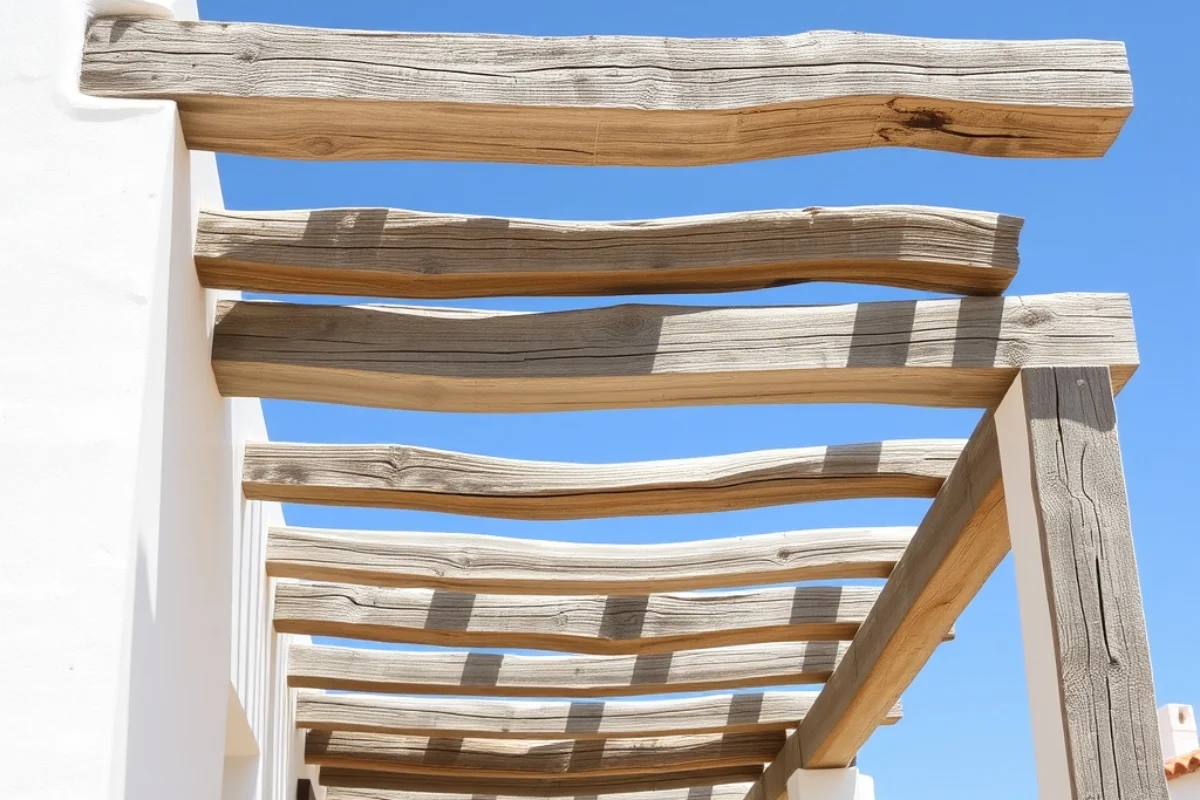
The spring check, part by part
Before any oil goes on, walk round with a screwdriver and a notebook. Press the tip into the wood at the points listed below. Sound wood resists. Soft wood that lets the tip sink in more than a few millimetres is rot, and oil will not fix it.
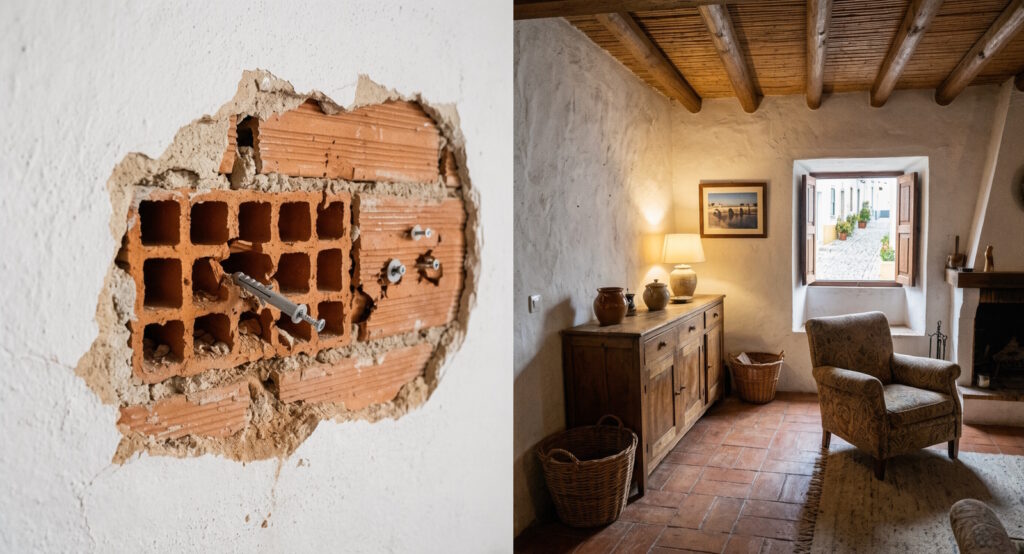
Pay attention to the wall fixings. A pergola is a sail in the wind, and the brackets that hold it to the house take a lot of strain over winter. Old Algarve walls are often hollow brick behind the render, and the wrong plug will slowly pull out. We explained why in why wall plugs keep failing in Portugal.
Oil, stain or varnish: what lasts in the Algarve sun
This is where most outdoor wood goes wrong. Varnish forms a film on top of the wood. It looks good for a summer, then the sun breaks it down, it cracks, water gets under it, and it peels in patches. Getting it off again means sanding back to bare wood.
A penetrating oil soaks into the wood instead of sitting on top, so there is no film to crack. It wears away slowly and evenly, and a new coat goes straight on top after a light clean. In practice it means a little work every year instead of a big job every three.
Most pergolas and decks in the eastern Algarve are treated pine. It takes oil well but needs it regularly. Hardwoods like ipê are more forgiving and can be left to go grey, although most owners prefer to keep the colour.
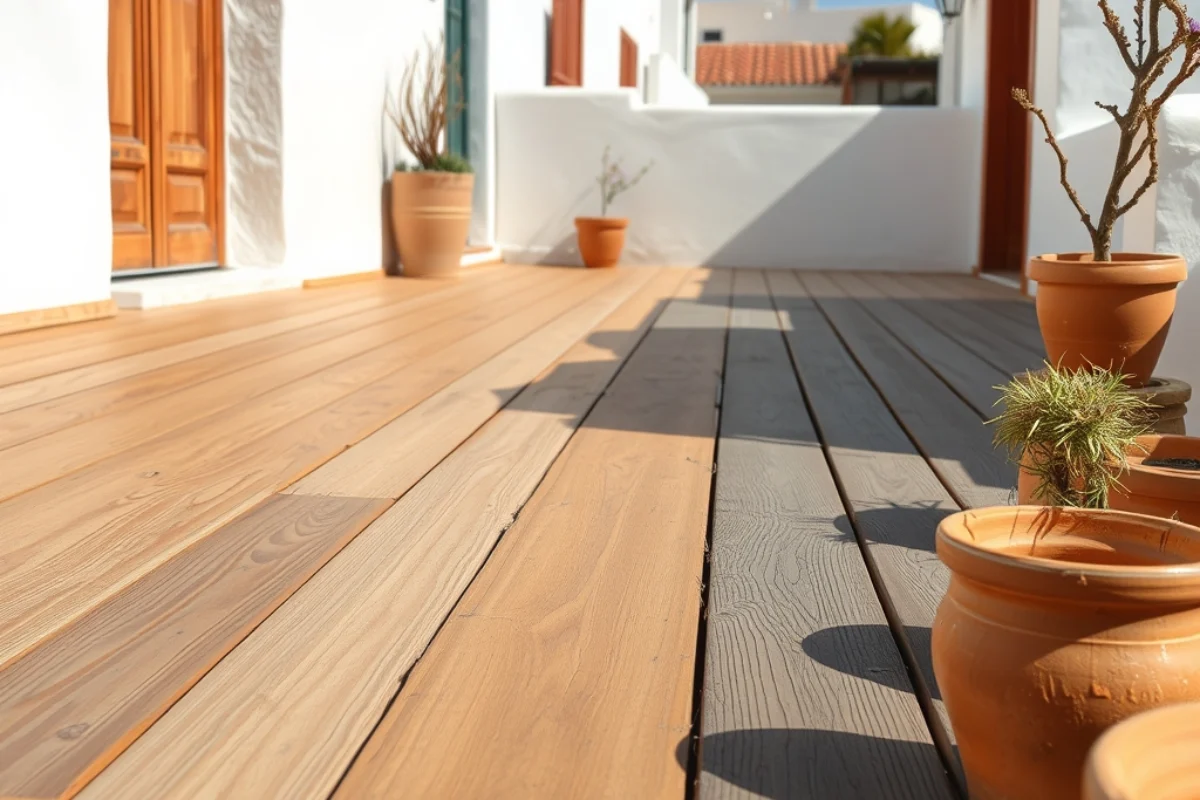
The job itself, in the right order
- Repairs first. Replace soft boards and slats, tighten or replace rusted screws with stainless steel, adjust gate hinges.
- Clean. Brush off dirt and any green algae. A wood cleaner and a stiff brush do more than a pressure washer, which tears the soft fibres of pine.
- Dry. Leave the wood at least two dry days after cleaning or rain. Oil on damp wood stays on the surface and goes sticky.
- Sand lightly. Just enough to remove the grey layer and any raised fibres. Bare, slightly rough wood takes oil best.
- Seal the ends. End grain on beams, posts and deck boards soaks up water fastest, so give it an extra coat.
- Oil. Two thin coats, the second when the first is dry to the touch. Wipe off what has not soaked in after twenty minutes.
Do it in the morning or late afternoon rather than in the midday sun, which dries the oil before it has time to soak in.
Why the timing matters
March and April are the window. Before that, the wood is still holding winter moisture, and the dry days are too few and far between. After that, the sun gets strong fast: by May the UV index in the Algarve regularly reaches 8 or 9 on clear days, and that is what breaks down wood fibre and fresh finishes. Wood that goes into the summer freshly oiled comes out of it in good shape. Wood that goes in grey and open comes out cracked.
Doors and wooden shutters are worth doing at the same time. A door that swelled and stuck over winter needs planing, but only once it has dried out in spring. Plane it in January and it will be loose by July.
What it costs
Our handyman team charges 35 euros an hour for carpentry and outdoor woodwork in Tavira, with a one hour minimum, and door planing starts from 50 euros. A small pergola over a two by three metre terrace usually takes half a day to check, clean, sand and oil. A deck or a large pergola with repairs takes longer, and wood, oil and replacement screws are charged at cost. Send a few photos and we can give you a fixed price before we come.
When it is not a handyman job
Spring care is maintenance, and it works on wood that is still sound. If several pergola posts are soft at the base, or a beam carrying the roof of a covered terrace has rot in the middle, that is structural, and it needs a carpenter or builder to replace it properly. Small round holes and fine dust under a beam can mean woodworm or termites, which are a job for pest control before anyone treats the surface. And if what is peeling is paint on rendered walls rather than wood, that belongs to a painter.
Questions owners ask
When is the best time to oil a pergola in the Algarve?
In March or April, during a spell of at least two dry days. The wood has dried out after winter and the sun is not yet strong enough to dry the oil before it soaks in.
Should I varnish or oil outdoor wood?
Oil. Varnish forms a film that cracks and peels in strong sun, and getting it off means sanding back to bare wood. A penetrating oil wears away evenly and is easy to recoat.
How often does outdoor wood need oiling here?
Once a year on most pergolas, gates and decks, and twice a year on wood that faces south or gets full sun all day.
How do I know if a pergola post is rotten?
Press a screwdriver into the bottom 30 centimetres of the post. If it sinks in more than a few millimetres, the wood is soft, and the post needs replacing rather than oiling.
Can I pressure wash my deck before oiling it?
It is better not to on pine. The jet tears the soft fibres and leaves the surface rough and furry. A wood cleaner and a stiff brush do a better job.