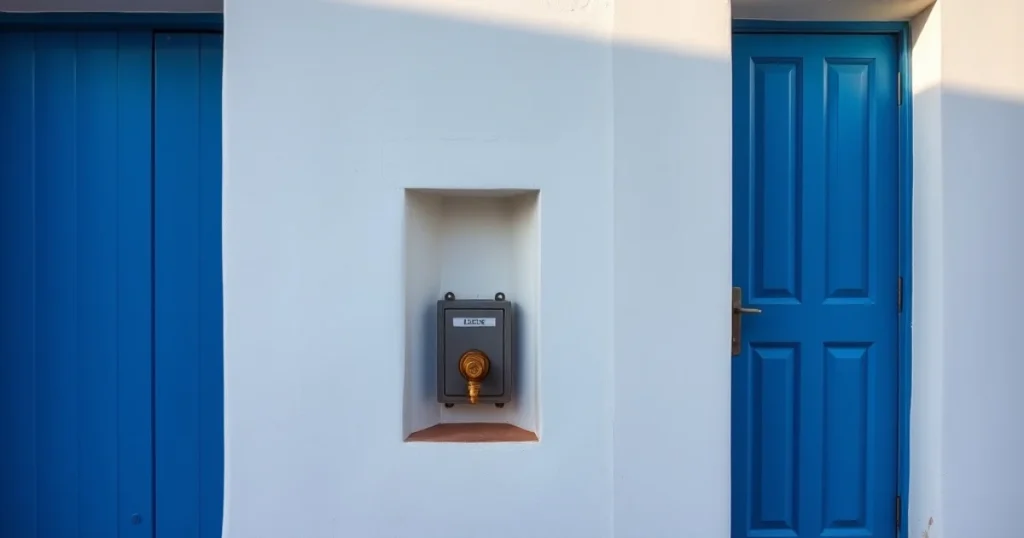
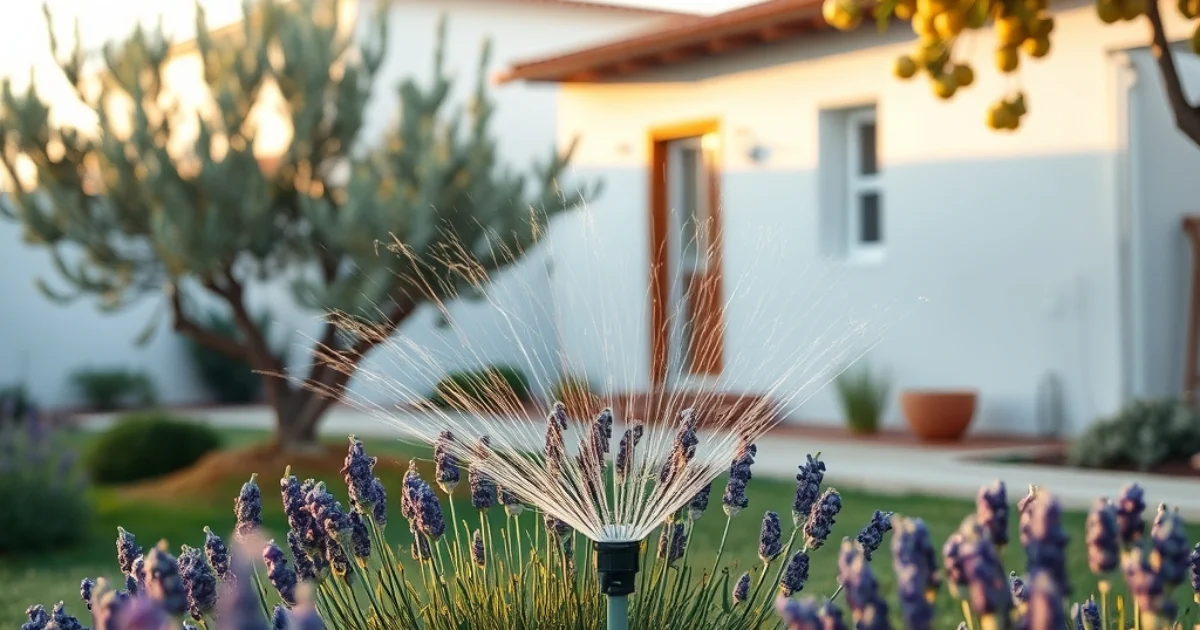
Before you switch the garden irrigation back on for the summer, test it on the water meter: run each zone on its own, then turn everything off and check the meter does not move. Most of the big summer water bills we see in the Algarve come from the garden, not the house: a split pipe under the gravel, a valve that never fully closes, or drippers that broke over winter and now run straight into the ground.
An irrigation system is the part of the plumbing that nobody looks at. It sits under bark and gravel, runs at five in the morning, and is set once and forgotten. A pipe that splits in March can run for weeks without anyone noticing, because the water goes into sandy soil and disappears. In a garden in Santa Luzia or Conceição, the first sign is often the bill, and by then it covers two months.
Why the garden matters more than it used to
The eastern Algarve has had a hard few years for water. After the drought of 2023 and 2024, the government cut consumption in the region across farming, tourism and homes. On 14 March 2025, after a wet winter, those cuts were eased to a 5 percent reduction for every sector, and by the end of that March the Algarve reservoirs were at 84 percent of capacity, according to the Portuguese Environment Agency. Rain in one winter does not make the problem go away, and water prices in the region reflect it. A garden that loses water to a leak is now an expensive garden.
It also matters for the house. Many irrigation systems in Tavira are fed from the same supply as the house, after the same meter. A leak in the garden looks, on the bill, exactly like a leak in the bathroom.
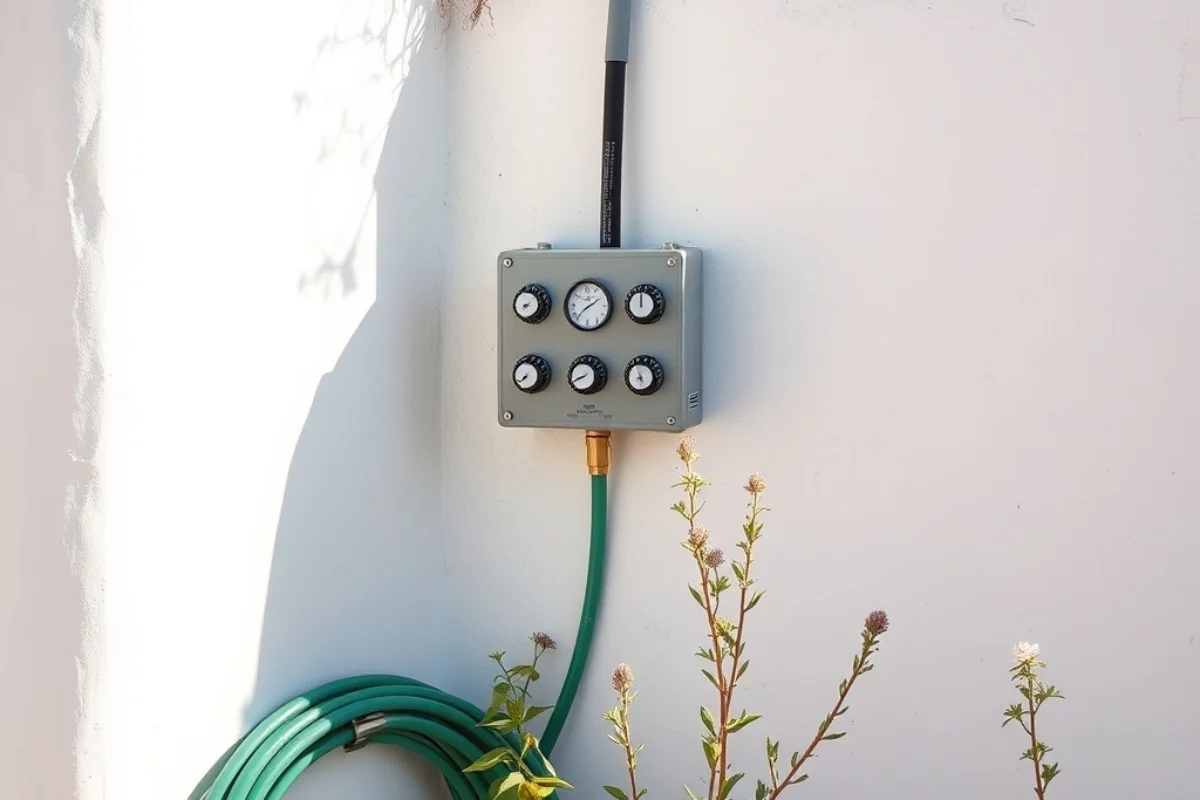
The parts of a typical system
Most garden systems in the eastern Algarve are a mix of the same parts, and each one fails in its own way.
The spring start-up, step by step
- Read the meter with everything in the house and garden off. Note the number and watch the small red dial for five minutes. It should not move.
- Clean the filter before the first run. Grit that settled over winter goes straight into the drippers otherwise.
- Run each zone by hand from the controller, one at a time, and walk along it while it runs. Look for jets where there should be drips, dry plants at the end of a line, and puddles where there should not be any.
- Turn the zone off and watch the ground for a minute. A sprinkler head or dripper line that keeps running after the zone is off has a valve that is not closing.
- Back to the meter. With everything off again, the dial must be still. If it moves only after the irrigation has run, the leak is in the garden.
- Set the clock and the programme for spring, not summer. Plants need much less in April than in July.
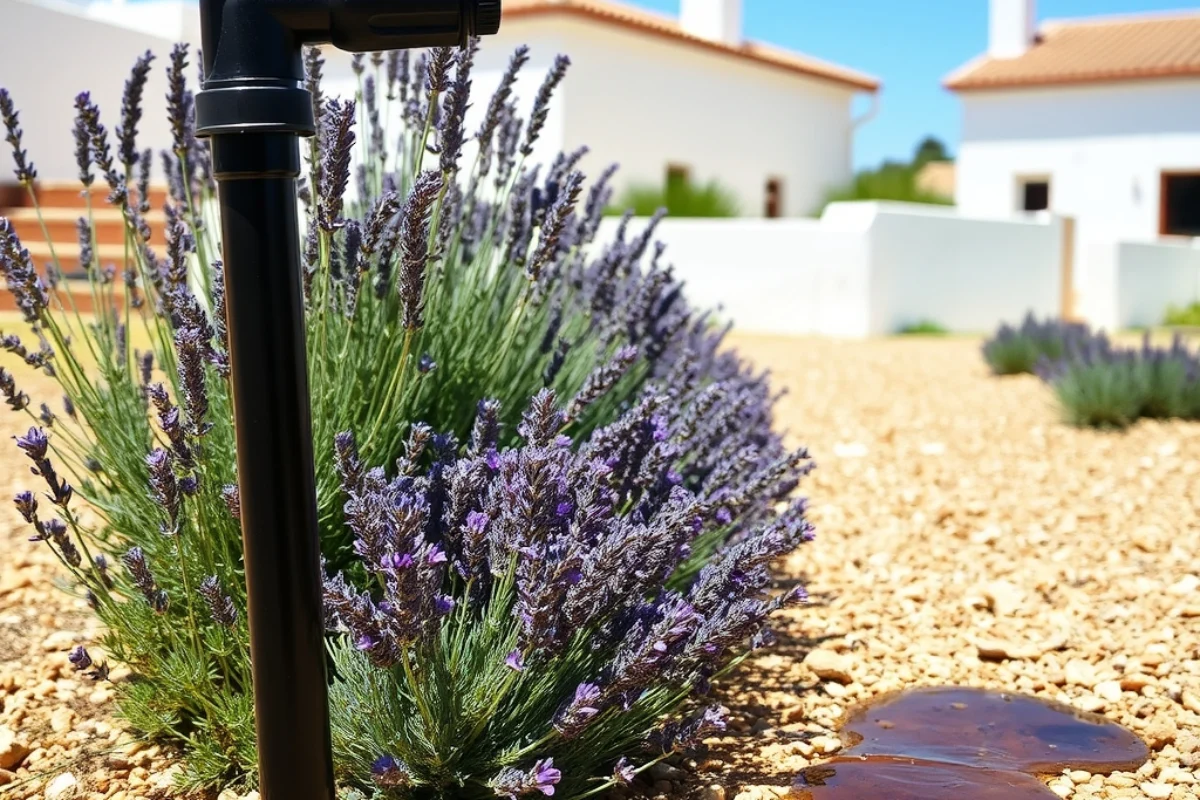
Signs of a hidden garden leak
A buried pipe leaking into sandy Algarve soil can be very hard to see. These are the signs that usually give it away:
- A patch of lawn or weeds that stays green and grows faster than the rest in a dry spell.
- Gravel or bark that is always dark and damp in the same spot, even in the afternoon.
- A slight dip or soft ground along the line of a buried pipe.
- Low pressure at the far end of a zone, while the start of the zone is fine.
- Ants and wasps gathering in one spot of a dry garden. They go where the water is.
- The meter moving at night when nothing is programmed to run.
If the meter test points to the garden but you cannot find a wet spot, close the valve that feeds the irrigation, usually near the meter or the controller, and test again. If the dial stops, the leak is somewhere in the irrigation system, and finding it is a matter of isolating one zone at a time.
Water less, and better
A working system can still waste water. A few changes save more than any repair:
- Water before sunrise. Watering at midday in summer loses a large share of the water to evaporation before it reaches the roots.
- Use drip lines for beds, pots and hedges, and keep sprinklers only for lawn.
- Water deeply and less often. Short daily runs keep roots near the surface and make plants more thirsty, not less.
- Add a rain sensor, or simply switch the controller off after a wet week in spring.
- Change the programme with the season. A programme set for August and left running from March wastes water for five months.
What a plumber does, and what it costs
When the leak is not obvious, a plumber isolates the system zone by zone, pressure tests the buried lines, and uses acoustic equipment to find leaks under paving or a lawn. Most garden leaks, once found, are a short repair: a new length of pipe, a joint, or a valve diaphragm. Our plumbers publish 2026 prices for leak detection and repair in Tavira: a visual and pressure diagnosis from 39 to 65 euros, and most common repairs between 60 and 180 euros. Full non-invasive leak detection with a written report for insurance is quoted separately. Contact us for a fixed price before the visit.
If the house itself has been closed all winter, do the garden after the inside, not before. The order for the house is in our plumbing restart checklist for reopening an Algarve house after winter. And if the meter test points inside the house rather than the garden, the steps in how to find a hidden leak in an Algarve house take over.
When it is not a plumbing problem
Not every garden problem is a leak. Plants that yellow and die while the soil around them is wet are usually being overwatered, or have a root disease, and that is a question for a gardener. A system that runs from a borehole and loses pressure may have a pump or pressure vessel fault, which is a job for a borehole specialist. And if the controller is fine but nothing comes out anywhere, check the main irrigation valve is open before calling anyone.
Questions owners ask
How do I know if my irrigation system is leaking?
Turn off everything in the house and garden and watch the water meter. If it is still when the irrigation valve is closed and moves when it is open with no zone running, the leak is in the irrigation.
When should I turn the garden irrigation back on in the Algarve?
Usually in April, once the spring rain has stopped and the soil dries out between showers. Start with a short spring programme and lengthen it in June.
Why does one irrigation zone keep running after it turns off?
Almost always because grit is stuck in the solenoid valve for that zone, so it never fully closes. Cleaning or replacing the valve diaphragm usually fixes it.
What time of day is best for watering the garden in summer?
Before sunrise. Less water evaporates, the plants have it when the heat starts, and the leaves dry quickly, which keeps fungus away.
Can a garden leak really make the water bill jump?
Yes. A split buried pipe can lose more water in a month than a household uses, and in sandy soil it often leaves no visible puddle at all.