If your Algarve house will stand empty this winter, the plumbing that matters is not about frost. It is about making sure nothing can run unnoticed for three months: read the meter, decide whether to close the main stopcock, switch off the water heater and the gas, and arrange for someone to run every tap every few weeks.
On the coast around Tavira, burst pipes from ice are rare. What we actually find when owners come back in March is quieter and more expensive: a cistern that filled all winter, a washing machine hose that gave way, a water heater that kept eighty litres hot for nobody, or a house that smells of drains on the first evening. All of it is avoidable with an hour of work before you lock the door.
Start with the meter, before you lock the door
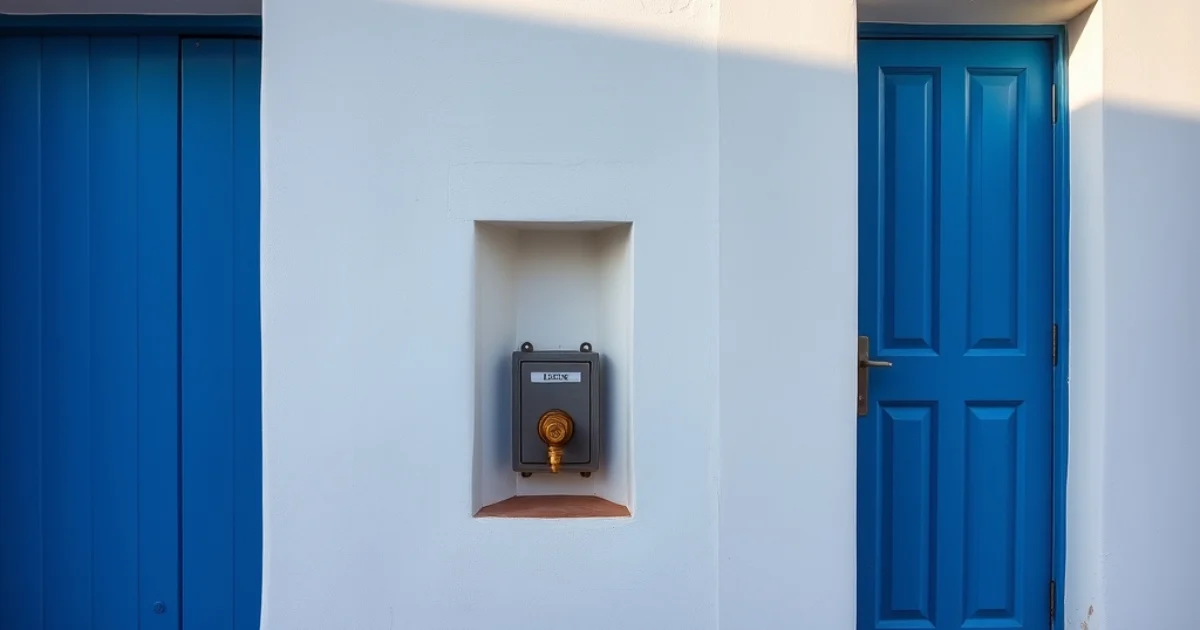
The water meter, the contador, is the cheapest leak detector you own. In most houses around Tavira it sits in a small box set into the boundary wall or the front of the house, with the main stopcock beside it. Tavira Verde, the municipal water company, reads it only every so often, so a leak in a closed house can run for months before a bill tells you.
The test takes half an hour. Turn off every tap, wait until the toilets have finished filling, and make sure nothing like an irrigation line or a pool top up is running. Then look at the dial. Most meters have a small red wheel or star that turns with any flow at all. If it moves while everything is off, water is going somewhere.
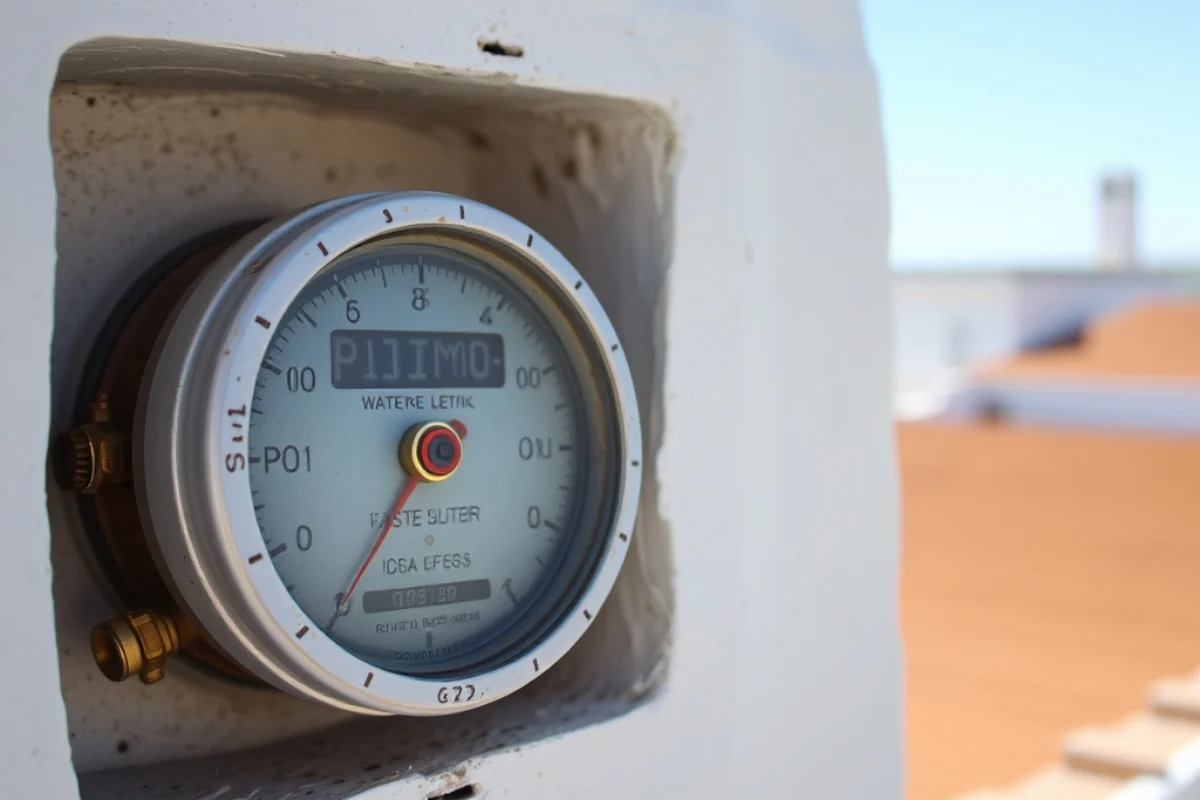
Before you leave, take a photo of the full reading with the date visible. When you or your keyholder come back, a second photo tells you in ten seconds whether anything ran while the house was closed. It also settles any discussion about an unexpected bill.
If the wheel turns and you cannot see why, check the obvious first: a cistern still trickling into the bowl, a dripping outside tap, the pool valve. If all of those are dry, the water is leaving through a pipe you cannot see, under a floor or inside a wall, and that is the moment for finding the hidden leak properly rather than locking up and hoping.
Should you turn the water off at the main?
For most closed houses, yes. A closed stopcock means a failed hose or a split joint can only release what is already in the pipes, which is a few litres instead of a few thousand. There are exceptions, and they depend on what else in the house uses water while you are away.
If you are not sure what feeds what, follow the pipe from the meter box. In older houses in Santa Luzia and Cabanas, the garden supply sometimes branches off before the stopcock, which means closing the main leaves the outside taps live.
The water heater: switch it off, close the gas, plan the restart
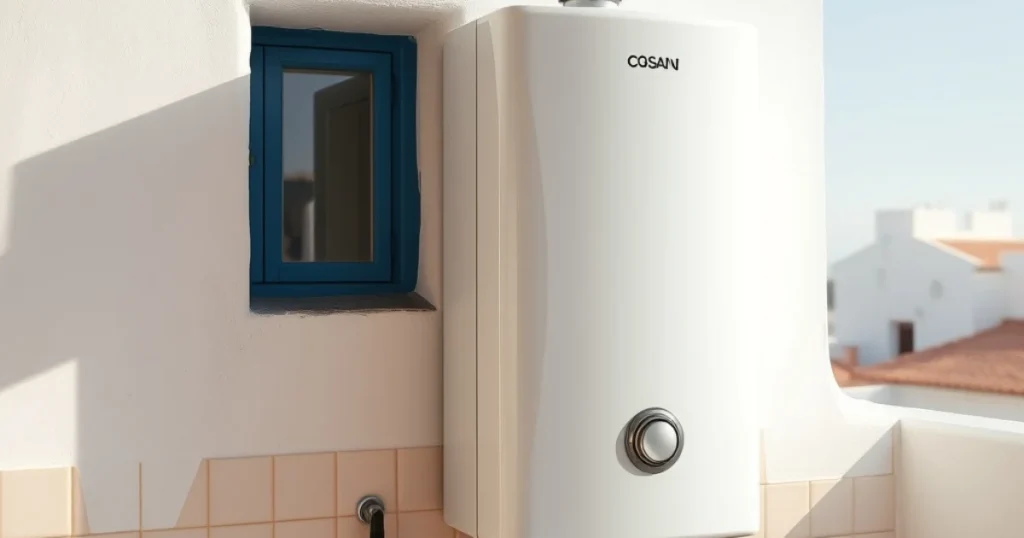
An electric water heater, the termoacumulador, keeps its tank hot whether anyone is there or not. Left on for a winter in an empty house, it heats eighty or a hundred litres every day for no one. Switch it off at its own breaker in the electrical board, and label the breaker so whoever comes back knows which one to turn on.
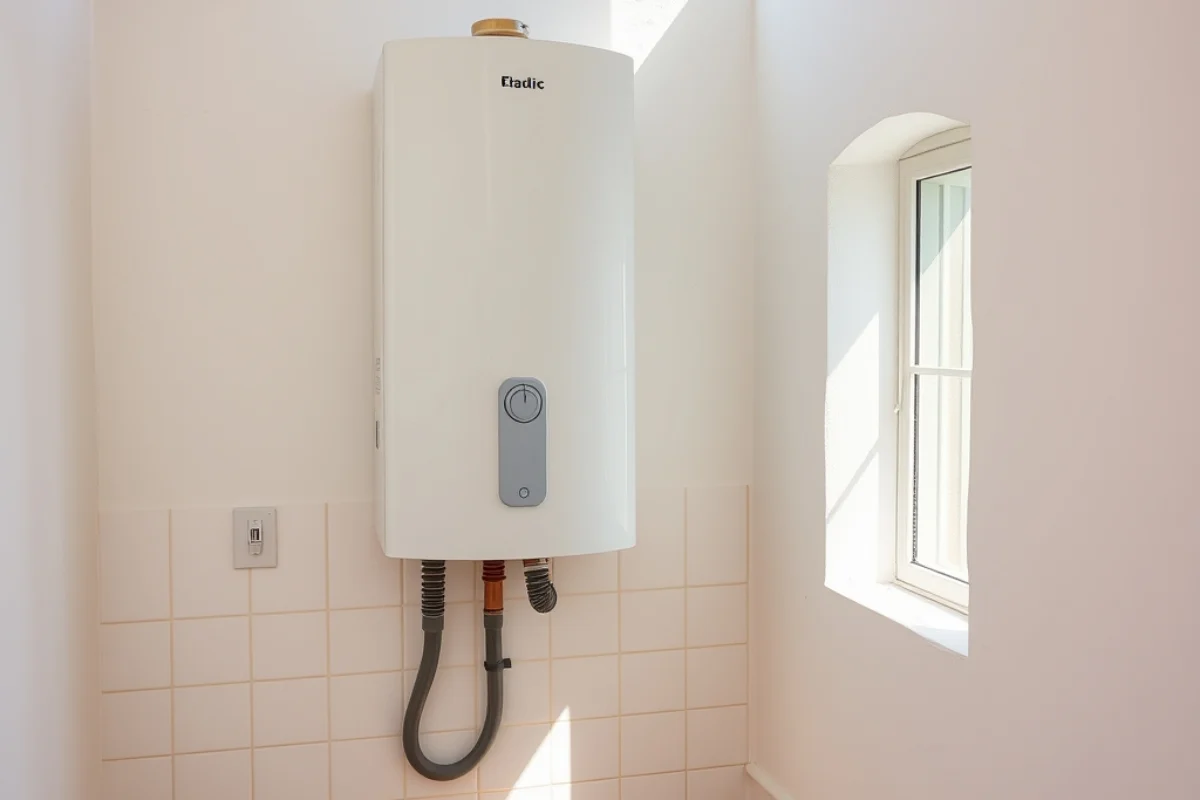
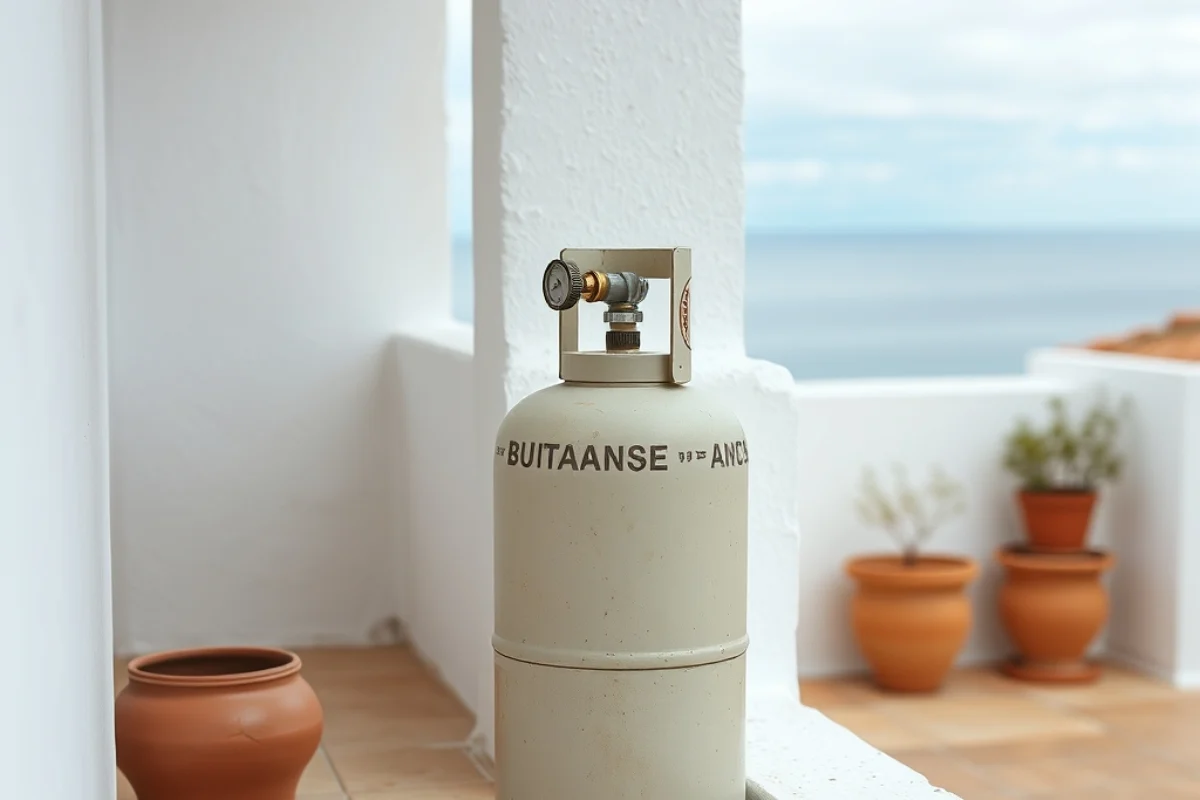
A gas water heater, the esquentador, uses nothing while it is idle, but the gas supply should still be closed. If the house runs on a butane or propane bottle, close the valve on top of the bottle and leave the regulator in place. If it has piped gas, close the gas tap before the meter.
The restart matters as much as the shutdown. Water that has stood for weeks in a lukewarm tank is where legionella bacteria grow. On the day you come back, heat the tank to at least 60 °C for a full cycle, then run each hot tap for a few minutes before anyone showers. For a gas heater, run the hot taps the same way once the gas is open.
One small trap: Portugal moves to winter time on 25 October 2026 and back to summer time on 28 March 2027. A heater on a mechanical timer follows neither change unless someone moves it, which nobody notices in an empty house and everyone notices on the first cold shower in spring.
Drains, toilets and the machines
Every sink, shower and floor drain has a trap that holds a little water as a seal against sewer gas. In a closed house that water evaporates, the seal goes, and the house smells of drains when you open the door. It is not a fault, and we explain the whole mechanism, and the trick that slows it down, in why a closed house smells of sewage. If a keyholder visits, running every drain on each visit solves it.
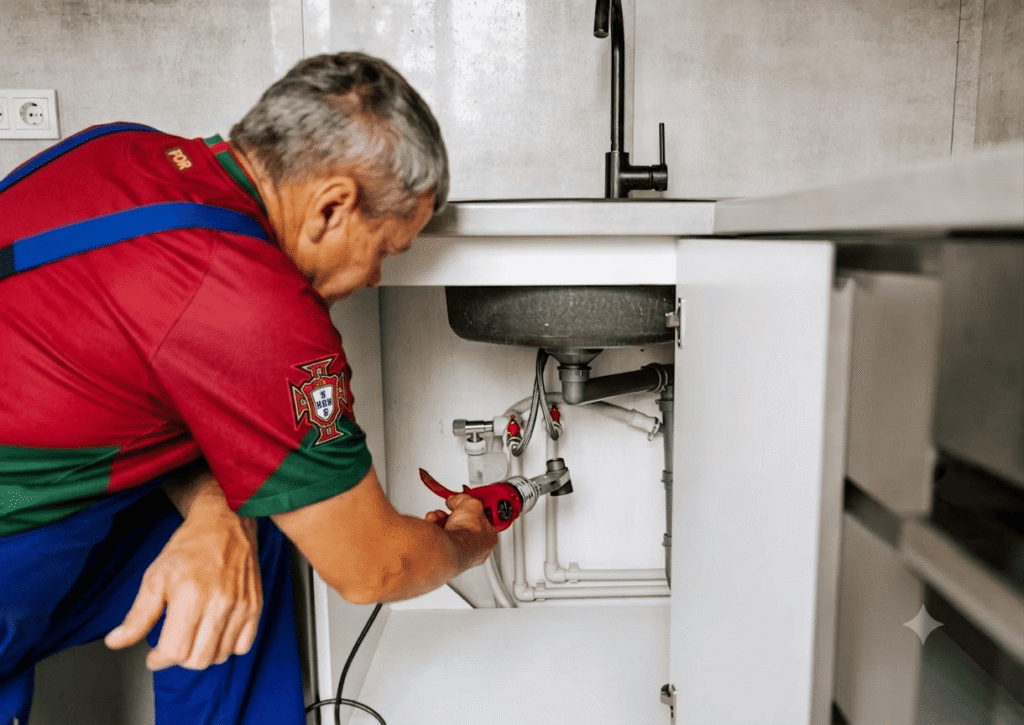
Toilets deserve a minute each before you go. A cistern whose fill valve never quite shuts off sends a thin stream into the bowl day and night, and it is the most common running water we find in houses that were left with the supply on. Lift the lid, flush, and listen. If it is still hissing a minute later, have it fixed before the winter rather than after.
Washing machines and dishwashers each have a small isolating tap behind them. Close both. Their hoses are under constant pressure, and a hose that splits in an empty house is the classic cause of a ruined floor. Leave the washing machine door and the detergent drawer open so the seal does not grow mould.
Outside: garden taps, irrigation and the septic tank
Switch off the irrigation controller, the programador, and take its batteries out if it has them, so it cannot restart after a power cut. Close the garden taps and empty the hoses. A pool on automatic top up should have that supply closed as well, because a valve that sticks open will fill it quietly all winter and the overflow takes the water straight to the drain.
If the house is on a septic tank rather than mains drainage, autumn is the right time to have it checked and emptied if it is due. In low lying parts of the campo the ground gets wet after the first heavy rains, and a full tank in waterlogged ground is a problem that waits for you to come back.
Do pipes freeze in the Algarve?
On the coast, almost never. Nights below zero in Tavira, Cabanas or Santa Luzia are rare and short, and pipes inside a house do not freeze in that time. Draining down the whole system there causes more problems than it prevents, because seals dry out and airlocks follow on the restart.
Inland is different. In the serra around Cachopo frost is a normal part of winter, and pipes on outside walls, roof tanks and anything in an unheated outbuilding are at real risk. For a house up there, draining down makes sense, but it includes the water heater and any solar system, so it is worth having a plumber do it once and show you how.
A keyholder routine that actually catches problems
The routine does not need to be complicated. Every two or three weeks, someone opens the stopcock, runs every tap and shower for a minute, flushes each toilet, checks the meter against your photo, looks at the ceilings under any terrace after heavy rain, closes the stopcock again and sends you photos. Twenty minutes, and it turns a three month blind spot into a series of short ones.
Check your home insurance as well. Many policies limit cover for escape of water once a house has been unoccupied for a set number of consecutive days, and regular visits are often what keeps that cover in place. The wording varies, so read yours rather than assuming.
If you have nobody local, our plumbing for holiday homes and rentals works with owners abroad and with existing keyholders, and every visit comes with photos and a fatura with your NIF. On our published 2026 prices a standard call out is 60 to 95 euros, which is less than one stained ceiling. That range is only a guide. The exact price depends mostly on how far the house is and what the visit involves, so get in touch for a firm figure before we come out.
When it is not a plumbing problem
Not everything you find in March is ours to fix. Black spots on walls and a musty smell in a closed house are usually condensation, not a leak, because warm days and cold nights in a sealed house have nowhere to send the moisture. That is a ventilation and handyman question, and we covered it in why Algarve houses grow mould in winter. A stain that appears below a terrace after rain is usually waterproofing, not pipework, and a roofer or builder is the right call.
The whole checklist on one page
Frequently asked questions
Should I turn off the water when I leave my house in Portugal for the winter?
Yes, in most cases. Closing the main stopcock limits any leak to the water already in the pipes. The exceptions are houses with solar thermal panels that need the supply, where you should ask the installer, and houses where a keyholder opens it on each visit.
Should I leave the electric water heater on while the house is empty?
No. Switch it off at its breaker and label it. When you return, heat it to at least 60 °C for a full cycle and run every hot tap for a few minutes before using the shower.
Do I need to drain the pipes for an Algarve winter?
Not on the coast. Frost around Tavira is rare and brief, and draining down causes its own problems. Inland in the serra, around Cachopo, it is worth doing, ideally with a plumber the first time.
How can I tell if water ran while I was away?
Photograph the meter reading before you leave and again when you come back. If the numbers have moved and nobody used water, something leaked, and the meter test with everything off will tell you whether it is still running.
My house smells of drains when I arrive. Is something broken?
Usually not. The water seals in unused traps evaporate while the house is closed. Run every tap, shower and floor drain for a minute and flush the toilets, and the smell normally clears within a day.