If your water bill has jumped and your habits have not changed, check the meter before you call anyone. Turn off every tap, wait half an hour and watch the small red wheel on the dial: if it moves, water is leaving the system somewhere, and a few simple tests usually tell you whether it is a toilet, the water heater, the garden or a pipe you cannot see.
Most hidden leaks we trace around Tavira turn out to be ordinary. A cistern that never stops filling, a safety valve dripping into a drain, an irrigation line split under the gravel. The expensive ones are the pipes buried in a floor or a garden, because they can run for months before anything shows. The order below goes from the free checks to the ones that need equipment.
First, make sure it really is a leak
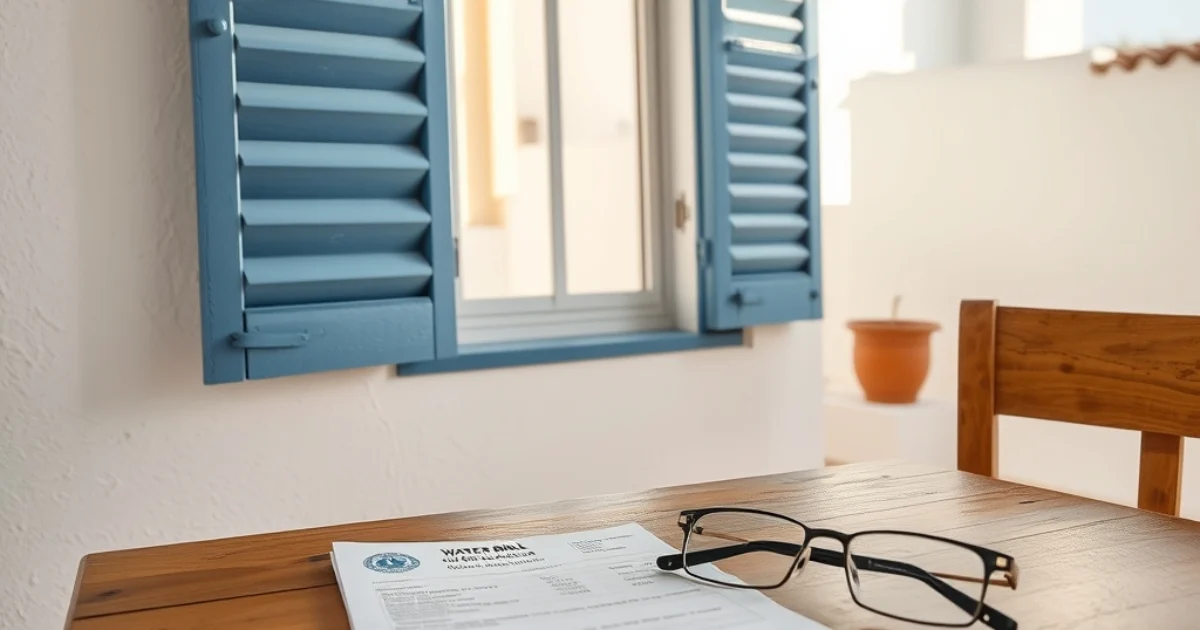
A high bill is not always a leak. Before anything else, look at the bill itself and check whether the reading was real or estimated. If the meter was not read for a few months, the company bills an estimate, and the first real reading afterwards can land as one large jump that covers several months at once.
Then think about the season. A pool topped up through a hot September, a new lawn, guests in the house for August: any of these can double a bill without anything being wrong. If none of them applies, and the jump is out of proportion, move on to the meter.
The meter test, done properly
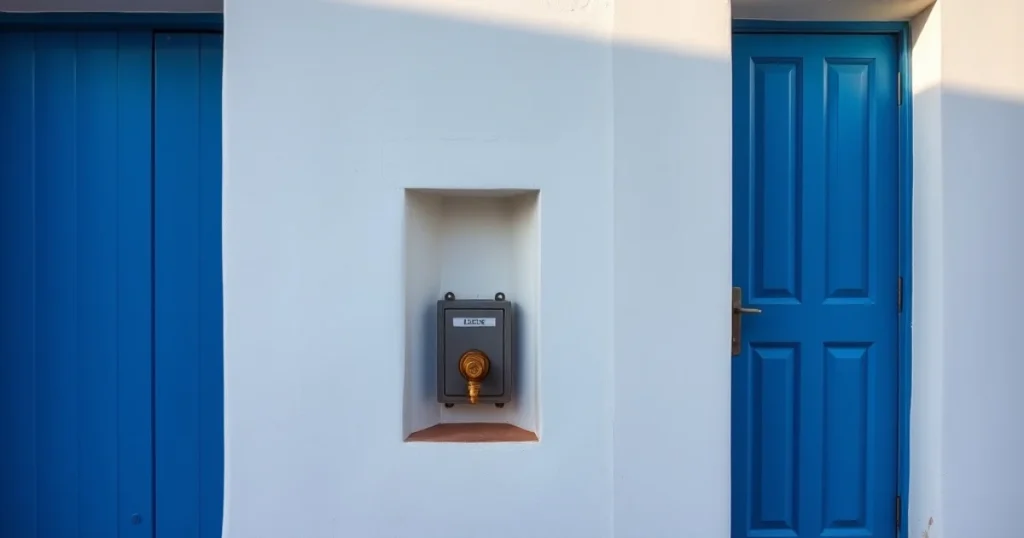
The meter is usually in a small box in the boundary wall or the front of the house, with the main stopcock beside it. The test is simple, but it only works if nothing in the house is using water while you watch.
- Turn off every tap, inside and out, and make sure nobody showers or runs the washing machine.
- Switch off the irrigation controller and any automatic top up on the pool.
- Wait until the toilets have stopped filling.
- Look at the small red wheel or star on the dial. It turns with any flow at all, even a drip.
- Write down the full reading, wait 30 minutes without using water, and read it again.
If the wheel is still and the numbers have not moved, there is no leak right now, and the high bill has another explanation. If either moved, water is going somewhere, and the next test tells you roughly where.
Before the house or inside it?
Many houses have a second stopcock where the supply enters the building, separate from the one at the meter. Closing that one splits the system in two, and the meter tells you which half is leaking.
In older houses in Santa Luzia, Cabanas and Conceição the supply sometimes runs a long way under the yard or the terrace before it reaches the house, often in old galvanised or polyethylene pipe. A buried pipe that leaks slowly into sandy ground can lose a lot of water without ever showing on the surface.
The usual suspects inside the house
If the leak is inside, start with the things that leak into a drain, because that water disappears without leaving a mark.
Toilets. A worn flapper or a fill valve that never fully shuts sends a thin, silent stream into the bowl. Put a few drops of food colouring in the cistern, do not flush, and come back after twenty minutes. If the colour has reached the bowl, that toilet is leaking. It is the most common hidden leak there is, and one of the cheapest to fix.
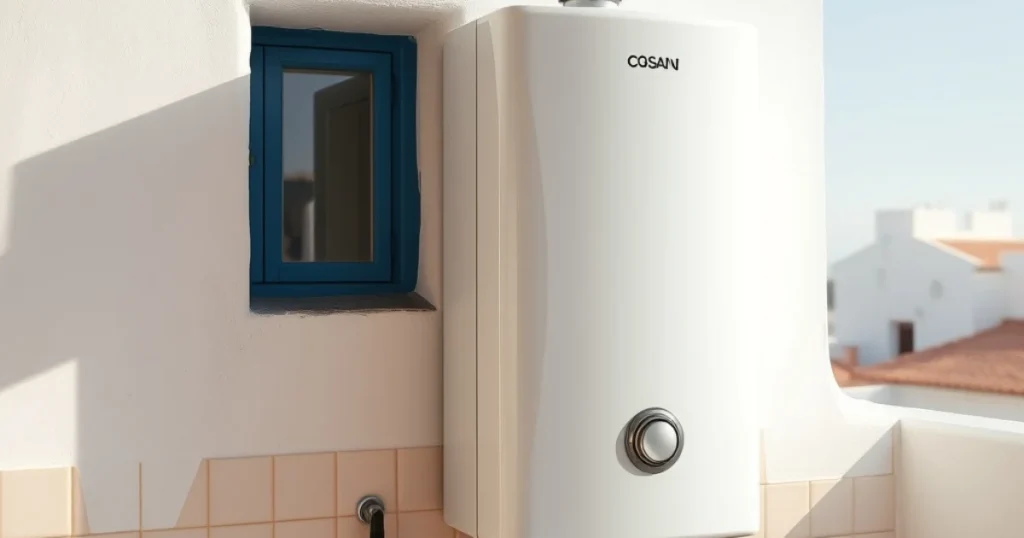
The electric water heater. Every termoacumulador has a safety valve that releases water when the pressure in the tank rises. A valve that has worn, often from limescale, drips all the time, usually into a pipe that runs straight to a drain. Look at the small pipe under the valve. If it is wet or dripping with no hot water in use, that is your leak.
Outside and the pool. Garden taps, hose connections and the pool top up valve are all easy to miss because they are out of sight from the house. A pool that loses more than evaporation explains is a separate question, and it has its own test.
Signs of a leak you cannot see
When the obvious suspects are dry and the meter still moves, the leak is in a pipe inside a wall, under a floor or under the garden. These are the signs that usually point to it.
- A warm patch on a tiled floor, which often means a hot water pipe leaking in the screed underneath.
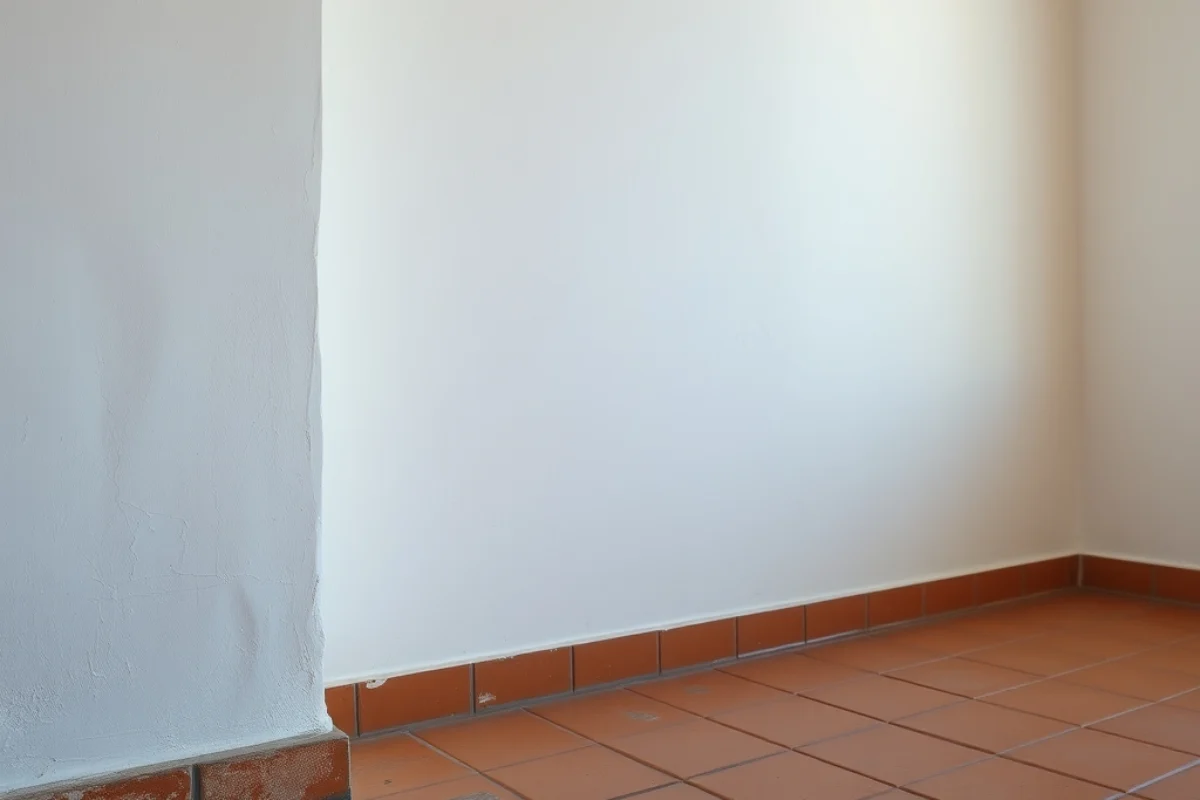
- Damp or a stain low on a wall that gets bigger, rather than one that comes and goes with the weather.
- The sound of running water when everything is off, easiest to hear late at night.
- Loose or hollow sounding floor tiles, grout that stays dark, or a skirting board that swells.
- A patch of garden that stays green or soft in a dry month.
- Lower pressure at the taps than you remember.
Finding it without breaking the house
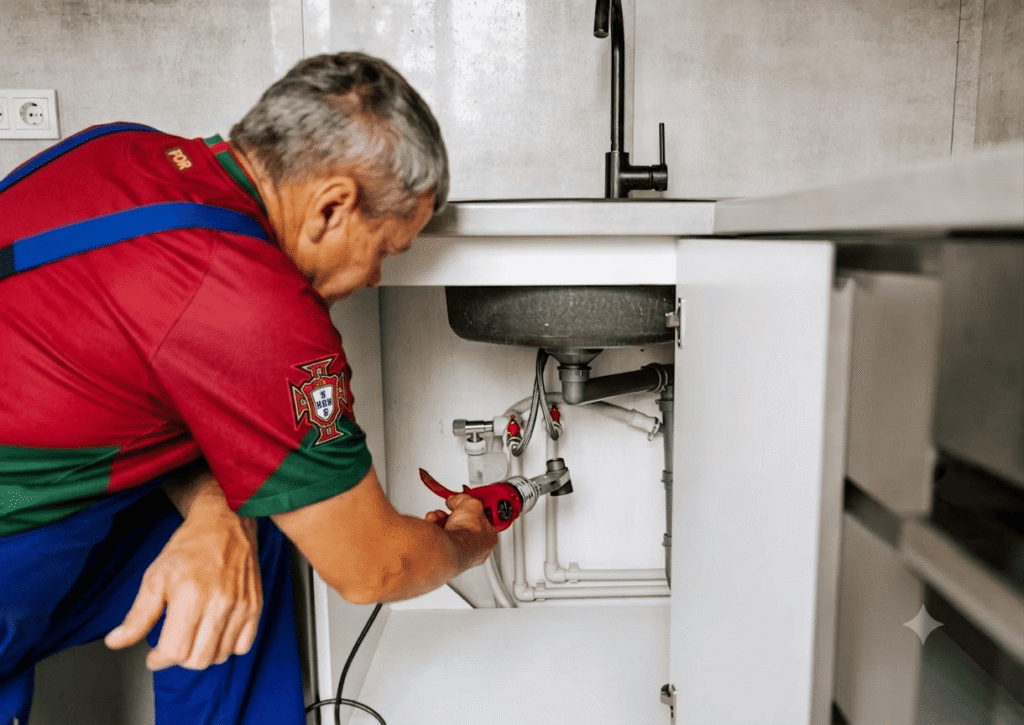
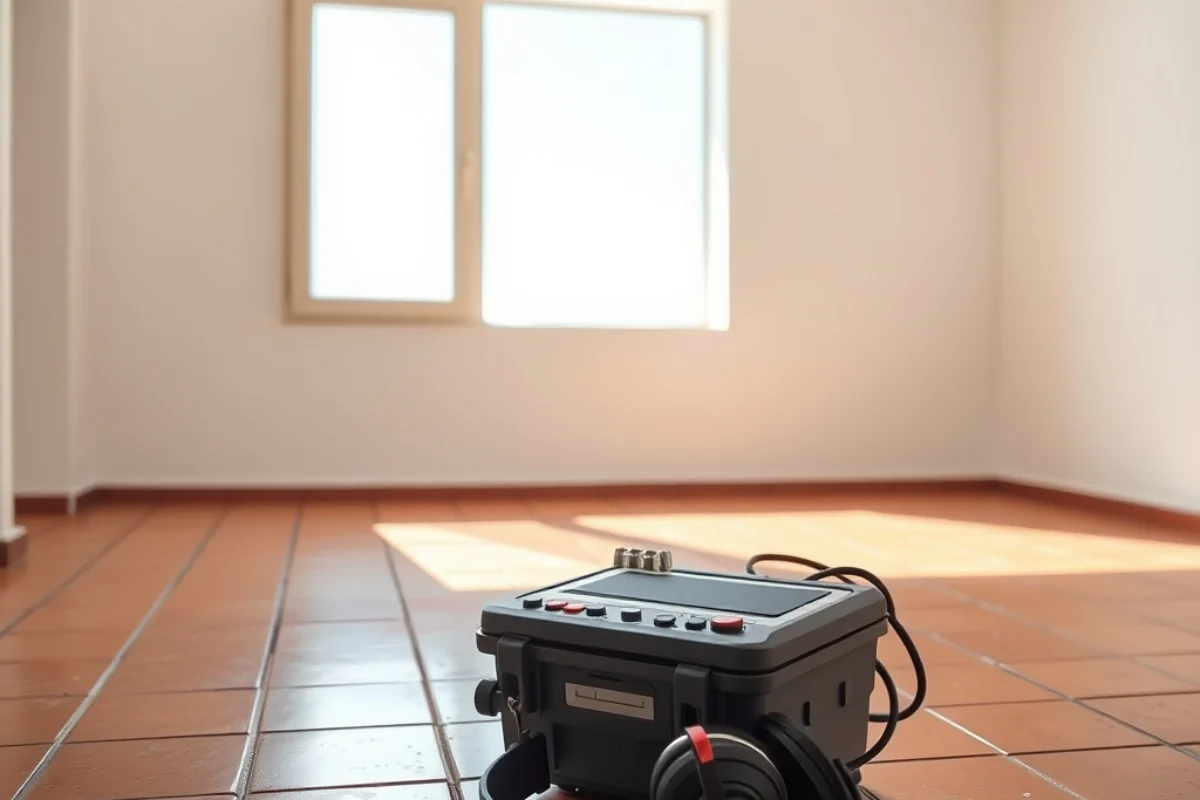
The old way to find a leak under a floor was to start lifting tiles where the damp looked worst. Modern leak detection avoids that. An acoustic microphone hears water escaping from a pressurised pipe under concrete or stone, a thermal camera follows hot water pipe runs and shows where moisture is spreading, and for very small leaks the pipe is filled with a harmless tracer gas that is detected where it comes up through the floor.
The aim is to open the floor once, in the right place. On the prices published by our plumbers in 2026, a visual and pressure diagnostic costs 39 to 65 euros, and a full non-destructive trace with a written report for your insurer costs 180 to 290 euros. These are indicative figures. The exact price depends on the distance to the house and how complicated the system is, so get in touch for a firm quote before the visit. You can see how the work is done on our page about leak detection and repair in Tavira.
Insurance, invoices and the bill itself
Many Portuguese multirriscos home policies cover the cost of finding a leak and opening the floor or wall to reach it, known as pesquisa e destruição, as well as the water damage it caused. The insurer will want two things: a technical report that says where the leak was and what caused it, and an invoice with your NIF. Both are worth asking for at the time, because getting them afterwards is harder. We wrote about why the paperwork matters in what plumbing work costs in Tavira and the documents that decide it.
It is also worth contacting Tavira Verde once the leak is repaired. Ask whether the excess consumption from a hidden leak after the meter can be reviewed. Rules on this vary between water companies, and they usually ask for proof of the repair, so keep the invoice.
When the damp is not a leak at all
Not every wet wall is a pipe. If the meter test is clean and you still have black spots, a musty smell or water on the inside of the windows, the cause is usually condensation in a house that is closed up or poorly ventilated, which we explained in why Algarve houses grow mould in winter. White powder and flaking paint at the bottom of an old wall is usually salt damp rising from the ground, which is a job for a builder or a painter who knows lime, not a plumber. A stain on a top floor ceiling after rain usually comes from the terrace above.
The meter is what separates these cases. If the wheel does not move, it is not a supply leak, whatever the wall looks like.
Frequently asked questions
How do I know if I have a hidden water leak?
Turn off every tap and watch the meter for 30 minutes. If the small red wheel turns or the reading changes while nothing is in use, there is a leak somewhere in the system.
What is the most common hidden leak in a house?
A toilet cistern that never fully stops filling. Put food colouring in the cistern, wait twenty minutes without flushing, and if the colour reaches the bowl, that toilet is leaking.
Can a water heater cause a high water bill?
Yes. A worn safety valve on an electric water heater can drip into a drain day and night. Check the small pipe under the valve: if it is wet while no hot water is running, the valve needs replacing.
How much does leak detection cost in Tavira?
On our published 2026 prices, a diagnostic visit costs 39 to 65 euros and a full non-destructive trace with a report costs 180 to 290 euros. The exact price depends on distance and the system, so ask for a quote first.
Does home insurance pay for finding a leak?
Many multirriscos policies cover the search and the opening of walls or floors, as well as the damage. You will need a technical report and an invoice with your NIF, so ask for both when the work is done.