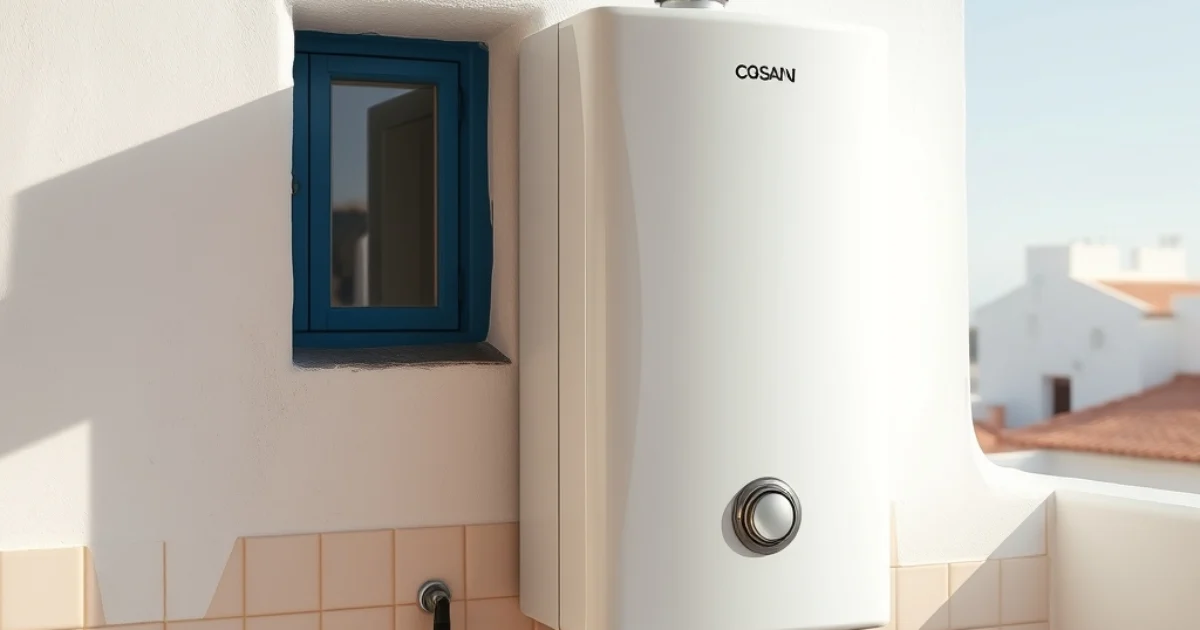
When a gas water heater, the esquentador, will not light, the cause is usually simple: flat ignition batteries, an empty or closed gas bottle, or too little water flow to trigger the burner. Check those three first. If they are fine, the fault is inside the unit, and the decision between repair and replacement comes down mostly to its age and the state of the heat exchanger.
Esquentadores are everywhere in the eastern Algarve, from flats in Tavira to farmhouses near Luz de Tavira, and most of them fail in the same handful of ways. Winter is when people notice, because a lukewarm shower in August is tolerable and one in December is not.
Three checks before you call anyone
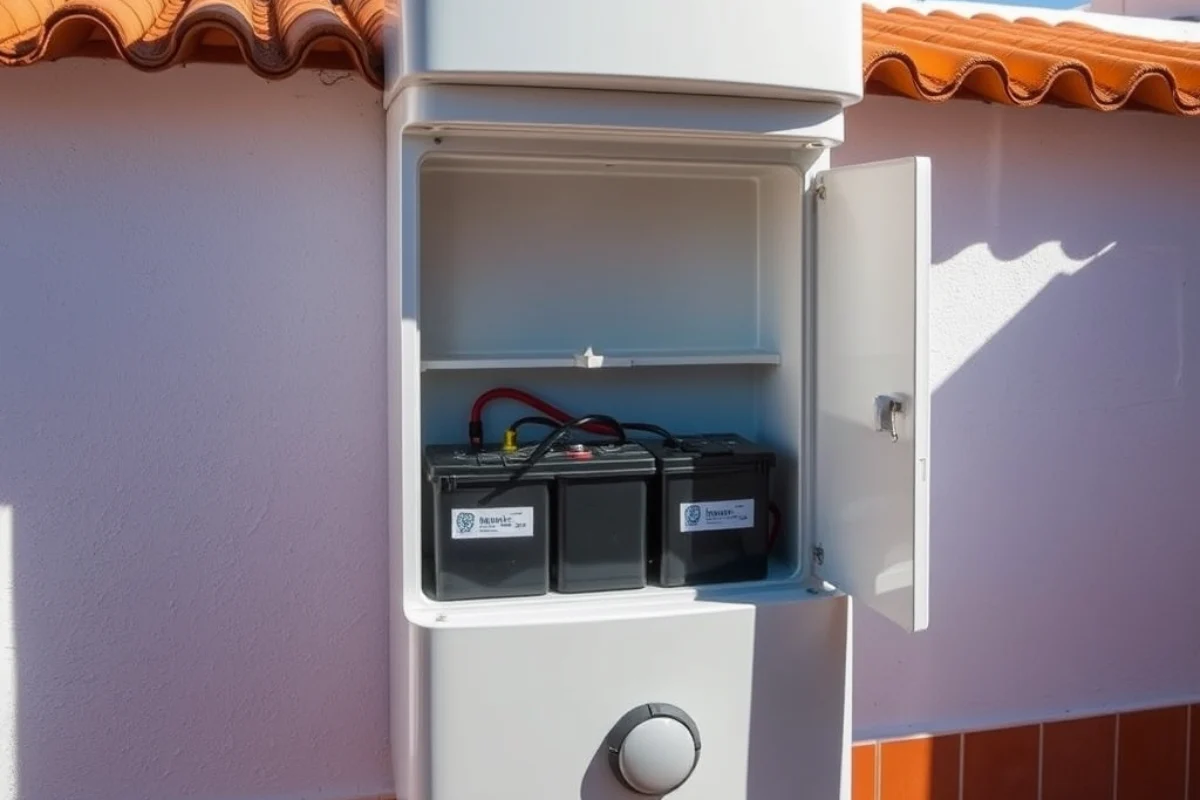
The batteries. Most modern esquentadores light with a spark powered by two large batteries in a compartment at the bottom of the case. When they run down, the unit clicks weakly or not at all, and nothing happens when you open the hot tap. Replacing them is the most common fix there is.
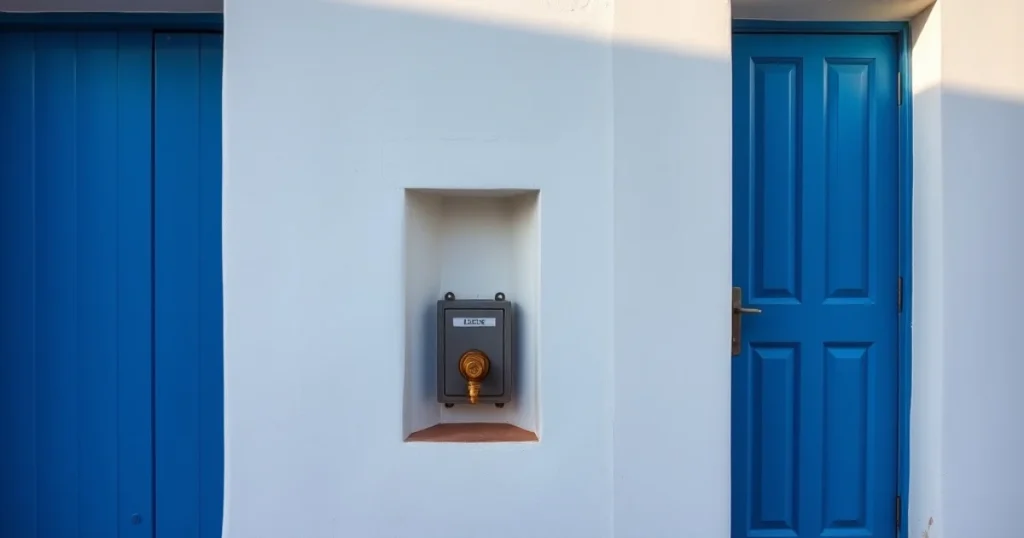
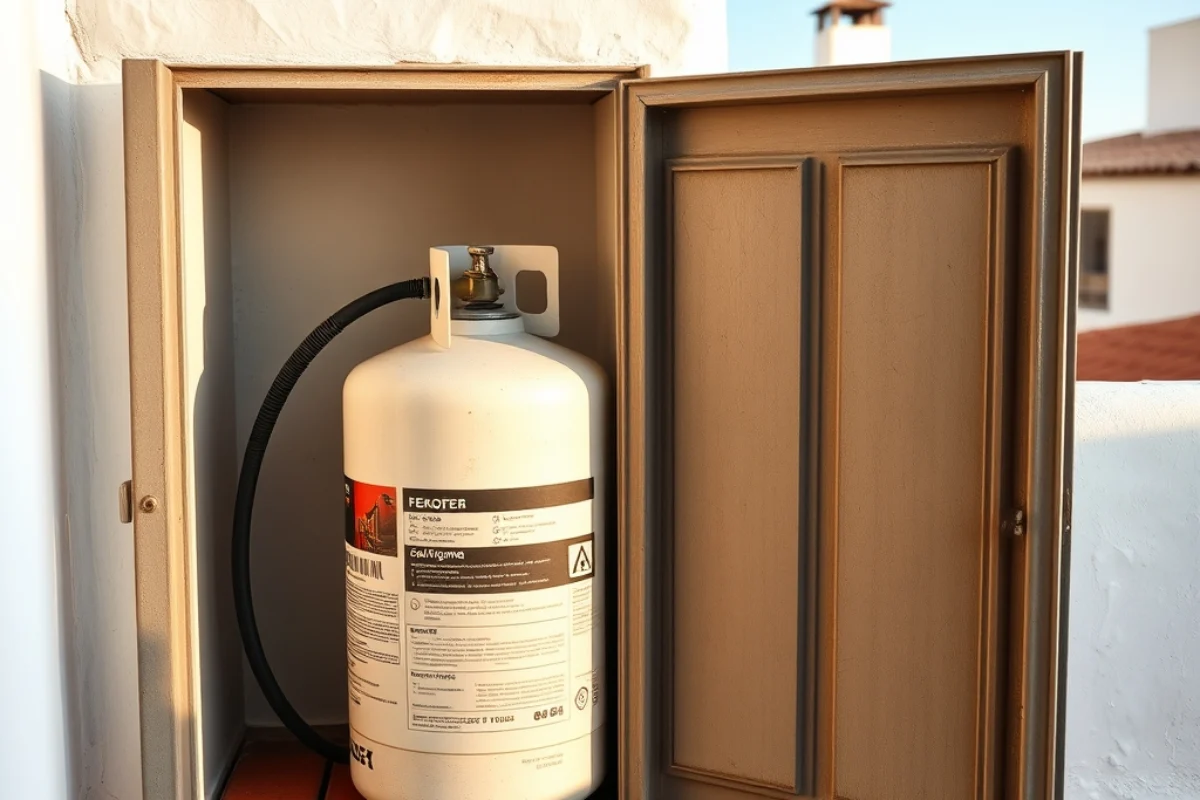
The gas. If the house runs on a butane or propane bottle, check that the bottle is not empty and that the valve on top is open. A bottle that is nearly empty can still light the cooker and fail to keep a water heater burning. If the house has piped gas, check that the gas tap before the heater is open and that the cooker lights.
The water flow. An esquentador only lights when enough water passes through it. A blocked shower head, a half closed tap or low pressure in the house can keep the flow under that threshold, and the heater stays off. Try the hot tap in the kitchen at full flow. If it lights there and not in the shower, the problem is at the shower. If the pressure is weak everywhere, that is a separate fault, which we covered in weak water pressure and how to find its cause.
Bottled gas: the details that catch people out
A lot of houses outside the town centre run the esquentador on a gas bottle, and a few details cause more call outs than any fault inside the heater.
The first is the hose. The rubber hose between the bottle and the regulator has a date printed on it, and once that date passes it should be replaced, because old rubber cracks and leaks. It costs a few euros and is the cheapest safety check in the house.
The second is the type of gas. Butane is the usual choice for bottles kept indoors or in a sheltered cupboard. Propane copes better with cold, so it is the usual choice for bottles kept outside, which matters more in the serra around Cachopo than on the coast. A bottle that frosts on the outside, or a flame that weakens on cold mornings, is a sign the bottle cannot give enough gas for the heater.
The third is the regulator. A regulator that is old, or the wrong one for the gas in the bottle, can let the cooker work while starving the heater. If the heater works with one bottle and not with another, look at the regulator before anything else.
What usually fails inside the unit
If the three checks are fine, the fault is inside. These are the ones we see most, with what each tends to look like.
Limescale deserves its own mention here. Water around Tavira is hard, and it varies street by street, which we explained in why your street decides how fast your plumbing wears out. A heater in a house with very hard water loses output year by year until it can no longer heat a shower properly in winter.
Safety: the part that is not a DIY job
Changing batteries and checking the bottle is fine for anyone. Anything inside the case is not. An esquentador burns gas in the room and sends the fumes out through a flue, and a fault in the gas valve, the flue or its safety device can let carbon monoxide into the house without any smell.
Three signs mean stop using it and call a gas technician: a yellow or orange flame instead of a blue one, soot marks around the case or the flue, and a smell of gas. A heater fitted in a bathroom, or in a closed room without ventilation, should be looked at even if it works, because that is where the accidents happen.
Repair or replace?
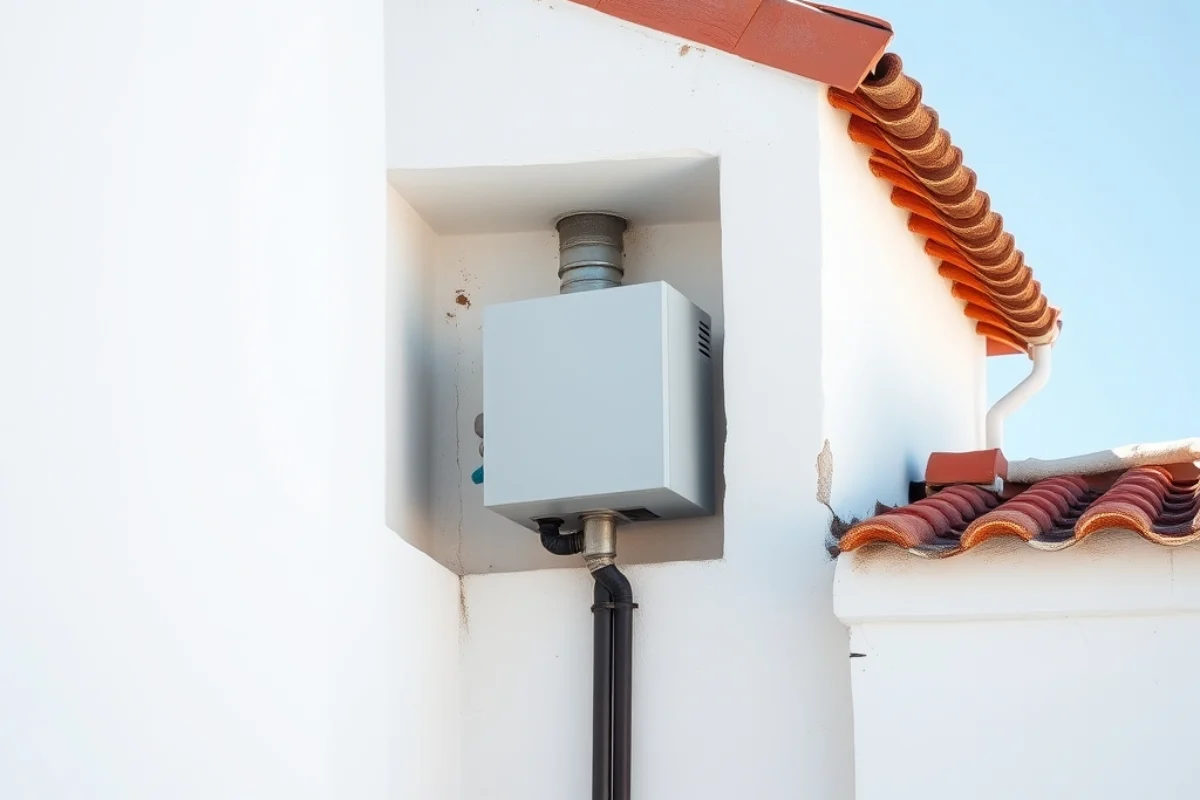
The age of the unit decides most cases. As a rough rule:
- Under about eight years old, with a fault in the ignition, the membrane or a sensor: repair.
- Over about twelve years old, with heavy limescale or a leaking heat exchanger: replace.
- In between: it depends on the part and whether it is still available for that model. Ask for the repair price and the replacement price together and compare them.
A new unit also brings a choice. A like for like replacement keeps the same connections and flue, which keeps the cost down. Moving it, changing the type or the capacity can mean new pipework and a new flue route, and that should be quoted separately before anyone starts.
What it costs in 2026
On the prices our plumbers published for 2026, a standard call out in working hours, including the first hour, travel within the Tavira municipality, diagnosis and a basic repair, costs 50 to 85 euros. Replacing a gas water heater costs 140 to 220 euros in labour. Parts and the new unit itself are quoted separately and itemised on the invoice.
These figures are indicative. Every heater and every house is different, and the exact price depends on the distance, the model and what the job turns out to involve, so ask for a quote before the visit. You can see what we do on our page about water heaters in Tavira, and ask for an invoice with your NIF, which you will need for any warranty claim on the new unit.
Keeping the next one going
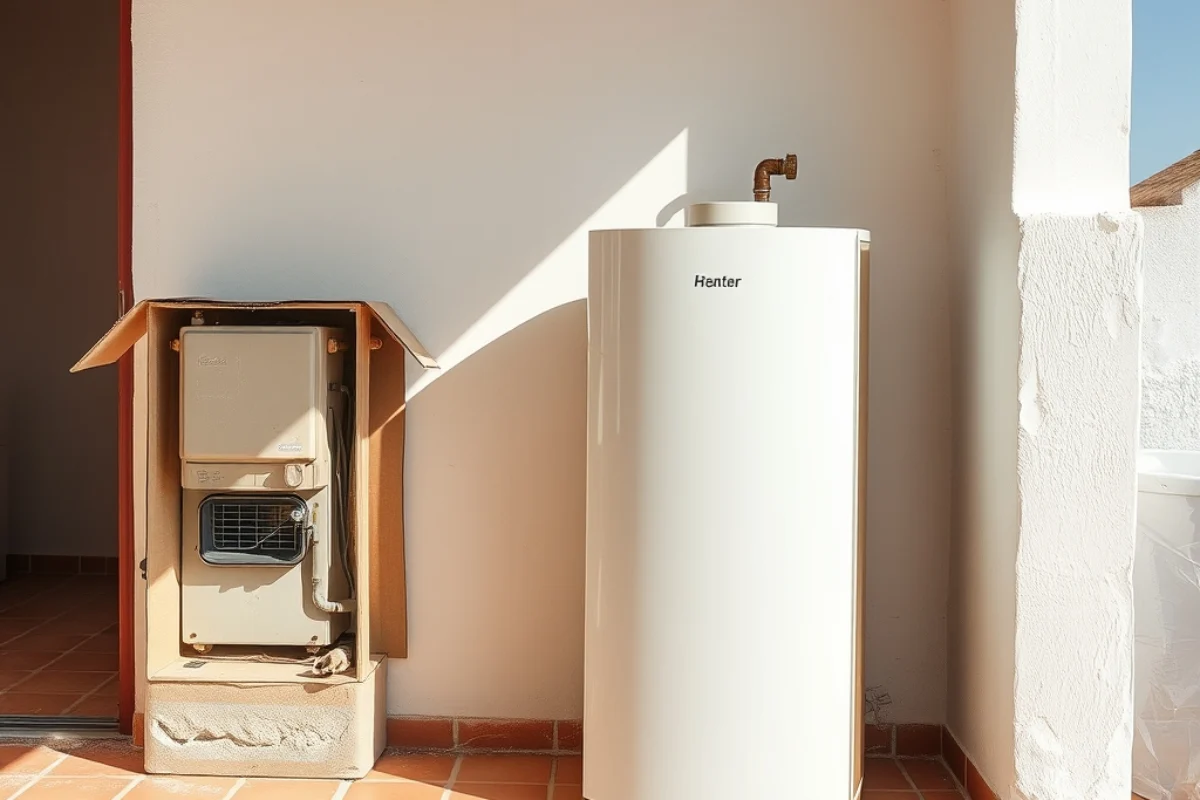
A yearly service is what keeps an esquentador reliable: cleaning the burner and the electrode, checking the flue and the safety devices, and descaling when the water is hard. Keep a spare set of batteries in the house, and if it is a holiday home, leave a note by the heater saying where they are. A guest who cannot find them on a Sunday evening will call you, and you will call us.
Frequently asked questions
Why does my gas water heater click but not light?
Most often the batteries are low or the gas is not reaching the burner. Change the batteries and check the bottle or the gas tap. If it still only clicks, the ignition electrode or flame sensor probably needs cleaning or replacing.
Why does my esquentador light and then go out?
The flame sensor or the flue safety device is cutting the gas, which they do when the flame is weak or the fumes are not leaving properly. Do not keep relighting it; have the flue and the sensor checked.
Is it worth repairing an old esquentador?
Under about eight years old, usually yes. Over about twelve, with limescale or a leak in the heat exchanger, a replacement is normally the better value.
How much does it cost to replace a gas water heater in Tavira?
On our published 2026 prices, the labour costs 140 to 220 euros, plus the unit and parts. Every case is different, and the exact price depends on distance and the model, so ask for a quote first.
Is it dangerous if the flame is yellow?
It can be. A yellow or orange flame, soot or a smell of gas can mean poor combustion and a risk of carbon monoxide. Stop using the heater, ventilate the room and call a gas technician.