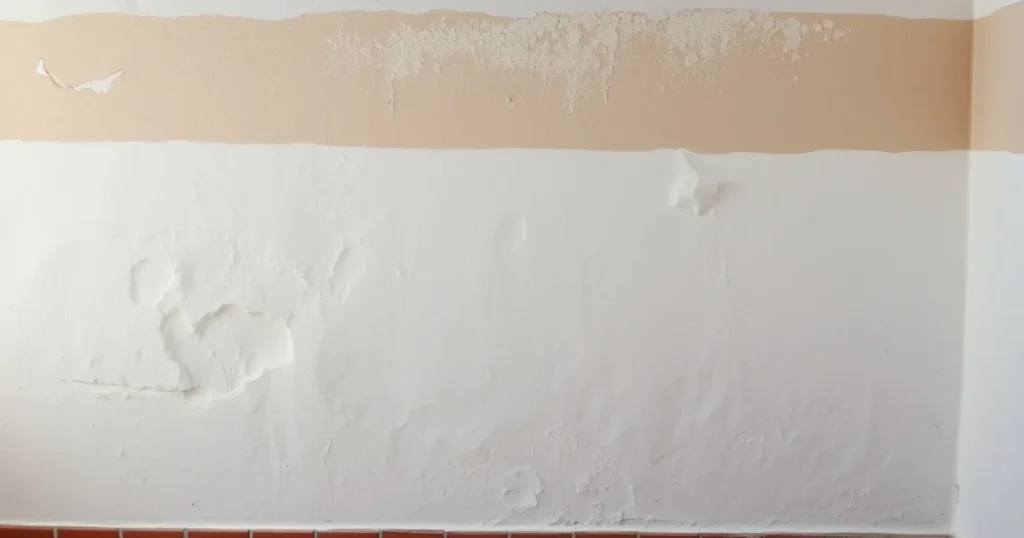

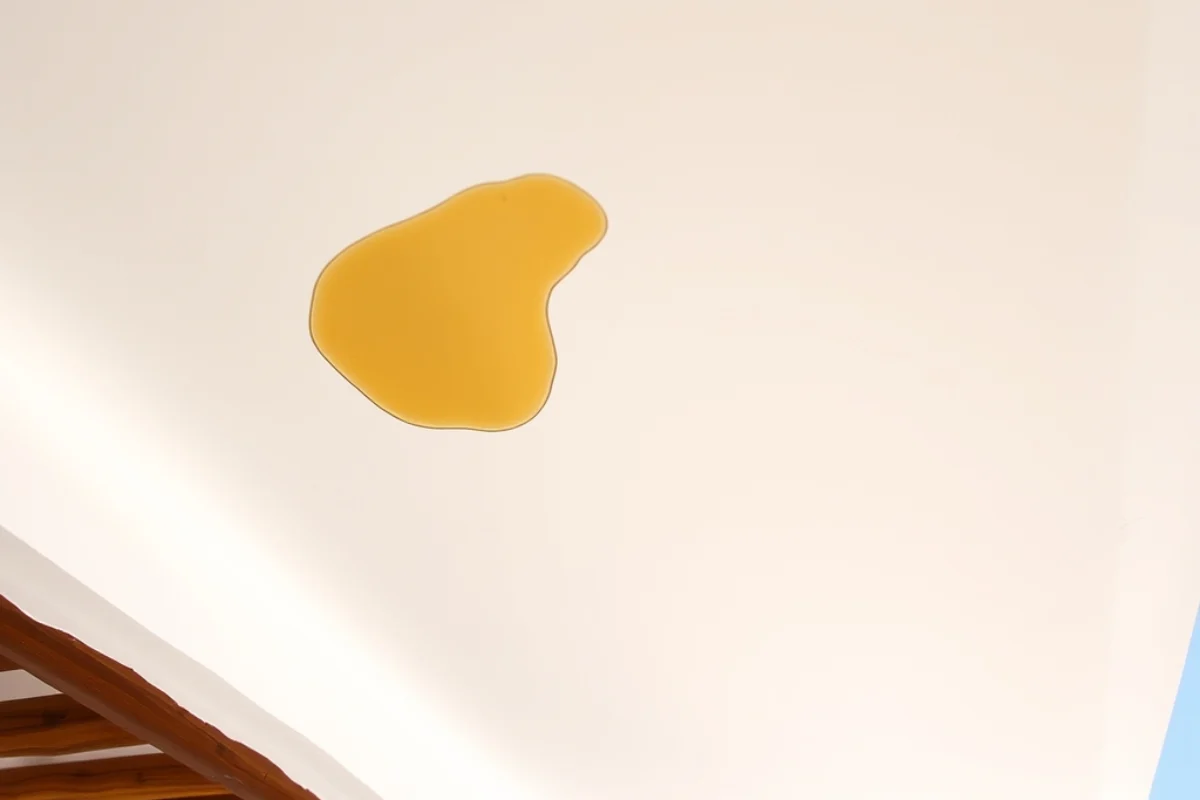
A ceiling stain that appears or grows after rain, under a flat roof terrace, is usually water getting through the terrace rather than a problem with the ceiling. The usual entry points are a drain, a skirting tile that cut the membrane, or cracked joints. Repainting the ceiling never solves it. In a shared building, a terrace that covers other flats is normally a common part, so the repair often falls to the condominium, but confirm that with your condominium administrator.
The first real rain of the autumn is when these stains show up. Many houses and flats in Tavira, Olhão and Fuseta have a flat roof terrace, the açoteia, and a summer of sun opens small gaps that nobody sees until water finds them. The useful work starts on a dry day, not during the storm.
Leak or condensation: read the stain first
Before anyone goes up to the terrace, look at what the stain is doing. Water from outside and condensation from inside look alike from a distance, and they need completely different fixes.
If it looks like condensation, the answer is ventilation and heating, which we covered in why Algarve houses grow mould in winter. If it looks like water from above, carry on. A band of white powder at the bottom of a wall is a third problem, salt damp, and it does not come from the terrace.
Where the water usually gets in
Water rarely enters directly above the stain. It can travel along the concrete or under the tiles and drop at a low point some metres away, which is why a repair done exactly over the mark so often fails. These are the places to look, in the order they usually fail.
- The drain. The joint between the drain body and the waterproofing is the weakest point of a flat roof. A drain blocked with sand also lets water pool. Our checklist for the winter rain starts here for that reason.
- The skirting. The membrane should rise up the wall behind the skirting tiles. When a skirting was fixed later, or tiles were replaced, the membrane is often cut, and water gets in behind it.
- Joints and cracked tiles. Open joints let water reach the layer underneath, and terraces with no movement joints crack as they heat and cool.
- Thresholds and fixings. Door sills, railing posts, satellite dish brackets and anything drilled through the surface.
- The fall. A terrace that does not slope towards its drain holds water for days, and standing water finds every small defect.

The dry weather test
The best way to find a leak is to recreate it on a dry day, one zone at a time, so that any new water inside points to one place. It needs someone downstairs watching the ceiling, and it needs patience, because water can take hours to come through.
- Clear the drains and let the ceiling dry as far as possible. Take a dated photo and mark the edge of the stain in pencil.
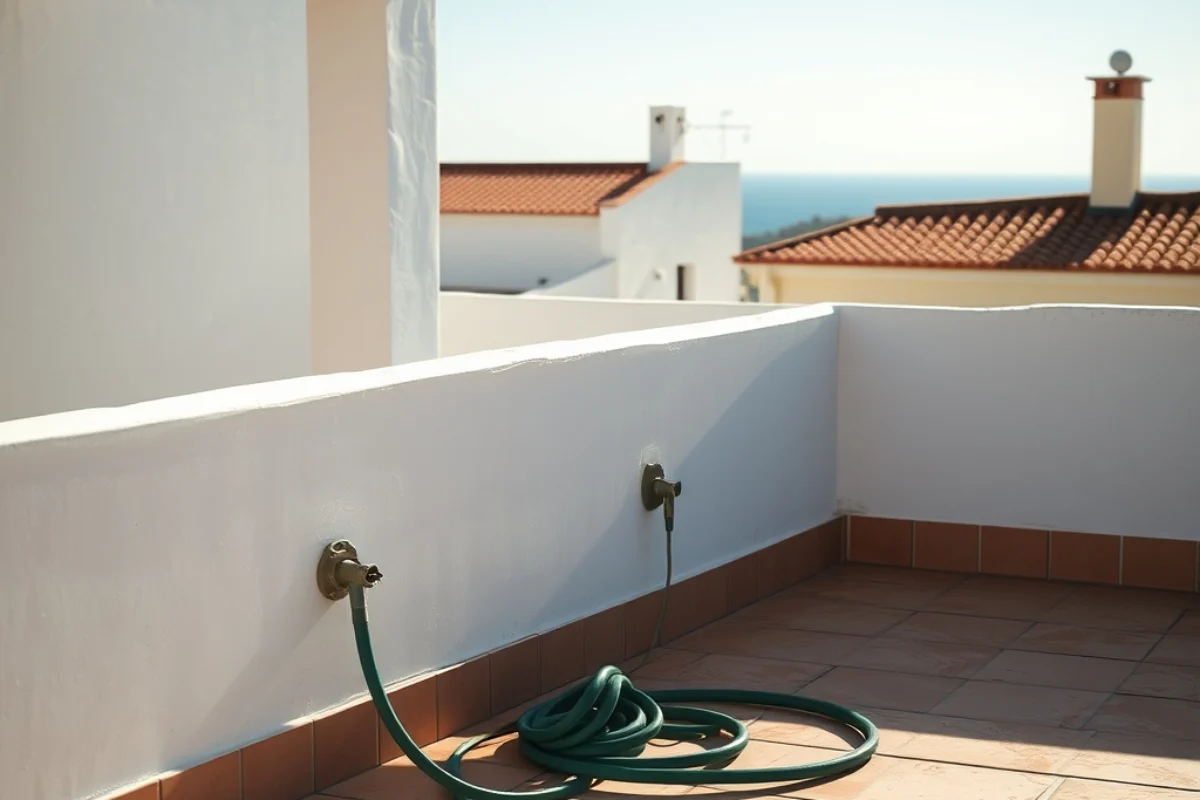
- Run a hose only around the drain for 15 to 20 minutes. Stop, and wait a few hours.
- Repeat along one wall, with the water running on the skirting and not on the floor. Then the next wall.
- Test thresholds and fixings the same way.
- Finally, wet the open floor of the terrace, one section at a time.
If the stain reacts, you have your zone. If nothing happens after a full day, the source may not be the terrace at all: a pipe in the ceiling void, a neighbour’s bathroom, or rain driven through a wall. A pipe is a job for a plumber first. In a shared building, tell the neighbours below and the administrator before you run water, because a test can make a real leak worse.
A survey does the same thing with moisture readings and a planned water test, and it is worth paying for when the terrace is large or the neighbours are involved.
Who pays in a shared building
This is the question most English language guides skip, and in Portuguese forums it is the one that starts arguments. For a detached house, the answer is simple: the owner pays. In a building in horizontal ownership, it depends on what the terrace is.
Under article 1421 of the Portuguese Civil Code, roofs and roof terraces are common parts, even when only one flat uses them. Under article 1424, the cost of keeping common parts in order is normally shared in proportion to each owner’s share. In a 2008 decision (case 2083/08-1), the Guimarães appeal court held that waterproofing a roof terrace used by the top floor was a cost for all the owners, because the terrace works as the roof of the whole building.
Do not treat that table as the final word. Courts have not always decided these cases the same way, the title deed and condominium rules matter, and some assemblies have passed their own rules on terraces. Confirm your case with your condominium administrator, and take legal advice if the amount is large. We are not lawyers, and this is general information.
What you can do in any case is build a clean record. Photograph the stain with dates, tell the administrator in writing, and ask for the source to be identified. If water is damaging your flat, also tell your own home insurer, because cover for water damage depends on the policy.

What the repair involves
Painting the ceiling first is the classic mistake, because the stain comes back through the new paint. The order is always outside first, inside last.
- Find the source and repair cracks, drains and any faulty fall.
- Prepare the surface, treating salts or mould where needed, and prime it.
- Apply a flexible liquid membrane, acrylic or polyurethane depending on the surface and exposure, with reinforcement at joints and around drains.
- Let the ceiling below dry out fully, then repaint it.
On the figures published by Tavira Painters – Painting Services, a membrane applied correctly lasts 10 to 15 years, and a typical terrace of 20 to 30 square metres takes two to three days. A dry spell is the practical limit in winter, so booking early matters more than the month.
What it costs in November 2026
These are average prices checked in November 2026. They do not include VAT, and they vary between interior and exterior work.
The membrane itself is billed at cost. Every quote is made after a site visit, because the state of the surface and the drains changes the job. The visit has a travel charge, stated in advance, and it is included in the price if the work goes ahead. Workmanship carries a 12 month guarantee, which no longer applies if the terrace is later drilled, tiled or altered.
When this is not a job for a painter
Some stains need someone else first. A leaking pipe needs a plumber. Sagging ceilings, large cracks in a slab or rusty steel showing through concrete need an engineer before any waterproofing. And if the tiles have to come up, or the slab fall has to be rebuilt, that is building work, and a membrane on top will not fix it.
Frequently asked questions
Why is there a stain on my ceiling after rain?
Under a flat roof terrace, it is usually rain getting through at a drain, a skirting or a cracked joint. The entry point is often some metres away from the stain.
How do I test a terrace for leaks?
Run water on one zone at a time on a dry day, starting at the drain, and have someone watch the ceiling below. Wait a few hours between zones.
Is it a leak or condensation?
A leak follows the rain and leaves a ring with a clear edge. Condensation follows the cold, shows as black spots in corners, and returns when the room is closed.
Who pays for a leaking roof terrace in a building?
A terrace that covers other flats is normally a common part, so the starting point is the condominium, unless an owner caused the damage. Confirm it with your condominium administrator.
Can I just repaint the ceiling?
No. Paint does not stop water, so the stain returns. Fix the terrace first, let the ceiling dry, then repaint.